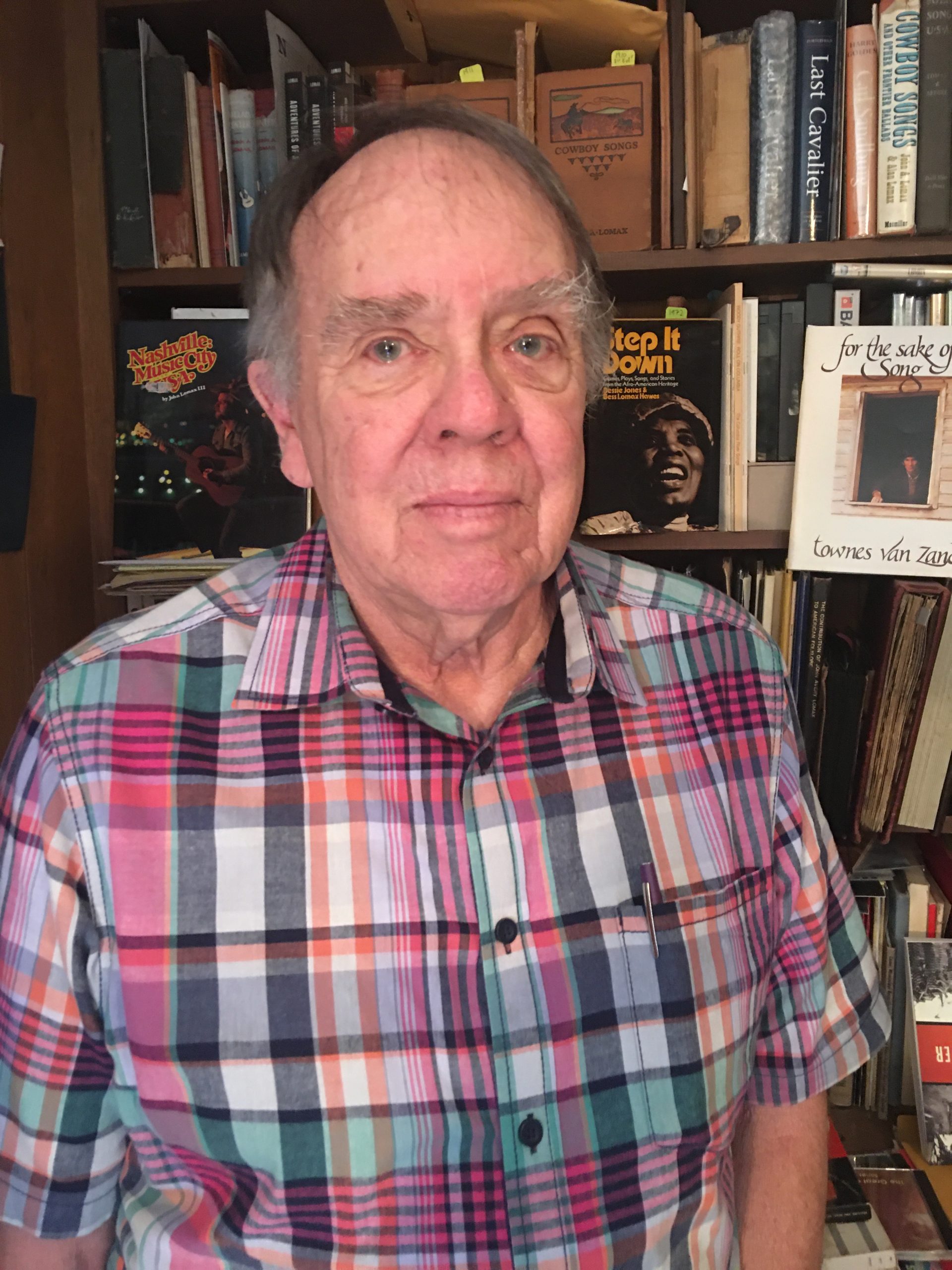
Texas Music Hour of Power Sat nites 7-9 pm central KRTS Marfa KWVH Wimberley and anytime here

tmhoposterofficial


www.marfapublicradio.org

www.westtexaspublicradio.org

www.wimberleyvalleyradio.org

www.kwvh.org

www.klkt.org

www.kkyl.org

www.kpft.org

Every Saturday nite, yours truly hosts the Texas Music Hour of Power, showcasing all kinds of Texas sounds created over the past century of recorded music. The show runs two hours because Texas spans two time zones and frankly, the music is too dang big to limit it to one hour.

Continue Reading

Joe Ely

Joe Ely died the other day. He was a big part of my musical life. There’s more to say, and I’ll say more sooner or later, but here’s what I wrote when I learned that he had passed. Vaya con Dios

Shortly after The Joe Ely Band album came out in 1977, I trekked to Lubbock to interview Joe and write him up in Texas Monthly. The album rocked hard, a real switch from the progressive country sounds coming out of Austin. It sounded like the connective tissue to Buddy Holly, Lubbock’s best known rock n roller. Joe and I visited Buddy’s grave, which was hard to find back then.
We drove to The Strip to buy beer and he showed me The Cotton Club.
Ponty Bone from his band joined Butch Hancock and Jimmie Dale Gilmore in an impromptu performance at Joe’s manager’s small frame house. Then Joe and I hit the streets and clubs, looking for his friend Little Pete. We supped on ‘cue at Stubbs, and visited with Stubbs who was a hardcore music fan. Joe and I ended up at TV’s, a black afterhours joint at the end of a cotton field east of town. I remember him saying he wanted to move to Austin and hire Michael Brovsky, Jerry Jeff Walker’s manager, to guide his career. I was going No, No, No! Moving to Austin will mess with your mojo. Turns out I was wrong. But I will say the most intense performances of the original Joe Ely Band that I witnessed were in Lubbock – at Fat Dawg’s, Rox, and the Tornado Jam.
I went to Seattle when the band was making their third album, Down On the Drag, with the producer Bob Johnston. The sessions were underwhelming. Johnston’s idea of taking the band out of their West Texas element and plop them in a studio in cold, gray, and drizzling Seattle turned out to be a not very good idea. This was a live band that could scorch the roof off of any roadhouse or honky-tonk whenever Lloyd Maines, Jesse “Guitar” Taylor, and Ponty Bone started cooking. That album did not reflect that.
Joe Ely has been a constant in my life ever since. I’ve written stories about him, and have done promo sheets and liner notes for him. I was proud to be there at Ardovino’s Crossing outside of El Paso in 2017 when he was inducted into the Texas Institute of Letters, the first musician to become part of that esteemed group.
Kris and I visited Joe and Sharon in Taos back in August. He had been dealing with health issues for several years and was physically diminished. But we managed to have an enjoyable conversation while he ate a box of chocolates, playing a little catch up, and listening to the “Raining In My Heart” track that was about to be released. Joe and Sharon were in a very good place, savoring a view that goes on forever, and savoring the day.
Joe Ely lifted the spirits of so many people, night after night, day after day. His was a well-spent life. I thank him for letting me run alongside for part of the way.
Continue Reading

Speedy Sparks

Thinking a few things about Speedy Sparks….

He was one of the first friends I made through music when I moved to Austin in 1973, working for Carlyne and George Majewski at Soap Creek Saloon bartending and helping out Jim Groenewegen, Doug Sahm’s official roadie. He was from Houston, I was from Fort Worth. We both moved to Austin for the music.
He was there when Freddy Fender emerged from obscurity to play a show at Soap Creek with Doug Sahm, a gig that effectively jumpstarted Fender’s career, and when Esteban Jordan aka Steve Jordan brought his psychedelic conjunto accordion to the club.
Next thing I knew, Speedy was playing bass in El Molino, the Tex-Mex ensemble put together by Joe Carrasco, a Sir Doug protege. He was paired up with drummer Richard “Eh-Eh” Elizondo, a four-fingered dwarf from San Antonio with his own language to make for one of the unlikeliest rhythm sections I’ve ever heard.
Speedy’s father was an opera singer.
Speedy resided for many years at the Red River Motors/Washington Motors compound on Red River Street south of Cesar Chavez Street, a collection of houses and cars and trucks and buses overseen by Artie Osborn and Doug Breeding, directly across the street from what is now the tallest skyscraper in Texas. This was the last honest hippie hang in Austin – a great place to find a cheap used car or hear great music, usually on Speedy’s record player.
Speedy was an accomplished musician, but also had a deep understanding where music came from. He knew his history. He told me when he was a teenager in Houston, he used to run with Chuck Dunaway, the disc jockey on KILT radio, Houston’s Top 40 station, who had the ears of teenagers throughout the Houston area. Dunaway took Speedy to see and hear rhythm ‘n’ blues acts like Bobby Blue Bland and Little Junior Parker.
Speedy started playing with several bands, notably the Bizarros, with whom he shared the stage with drummer Bill Bentley and guitarist Sterling Morrison, a University of Texas grad student of Medieval Literature and former member of the avant-garde band The Velvet Underground.
By 1981, he was the bass player in the reconstituted Sir Douglas Quintet and hit the road with Doug Sahm and Augie Meyers throughout the United States and Europe. Speedy emulated Doug in finding good places to eat on the road, no matter where they were, and on his own, sought out landmarks and points of interest, especially related to music. His curiosity was unlimited.
Ask music people in Amsterdam, Stockholm, and Norway: they all know Speedy Sparks.
When Patrick Mathe of New Rose Records in Paris, France came to Austin, Speedy became his producer, A&R man, and bandleader, producing and playing on Roky Erickson’s album All That May Do My Rhyme, featuring “Clear Night For Love,” the psychedelic singer’s most Buddy Holly-esque rendering ever. Roky and Speedy were Buddy Holly nuts.
A connoisseur of the 45 rpm single, Speedy started his own company, Dynamic Records, as a goof. He collaborated with an exceptionally talented guitarist named Junior Brown to release the single “Too Many Nights In the Roadhouse” b/w “My Baby Don’t Dance to Nothing But Ernest Tubb,” unwittingly launching the solo career of the master of the Guit-Steel. (Read Junior’s recollections on Facebook: Speedy and Junior weren’t trying to do anything other than have a goof making a record).
He said he wanted to make a record singing in Czech. He grew up loving Tex-Czech because that was what he heard when he visited his grandparents in Brenham.
Speedy was a happy sideman. He wasn’t a mic hog and didn’t need the spotlight. Playing in the band is what mattered. He made his own record on Dynamic – “OK, Let’s Play,” which became the title of Speedy’s solo album.
He revived the career of George Tomsco, the guitarist in the West Texas-New Mexico rock and roll band, The Fireballs, by accompanying George on playdates around Austin.
He raised Charlie and Will Sexton. Speedy had dated their mother Kay Sexton, and took them in when they left their home in Wimberley in their early teens, providing them a musical education as they grew into artists in their own right.
He played bass in the Texas Tornados, the supergroup with Freddy Fender, Flaco Jimenez, Doug Sahm, and Augie Meyers – Sahm called them “the Tex-Mex Beatles,” won a Grammy, and toured the world.
He understood Homer Henderson.
He understood James Hand, the prickly neo-traditional country singer, and played in his band until Hand’s passing.
He played in more bands in Austin than any single person I know – Del Rio, the Nortons, the Mystic Knights of the Sea, the Koolerators, TG Band, the John X. Reed Band, Alvin Crow, Leroi Brothers, Teddy and the Tall Tops, The Texas Mavericks, The Rhythm Rats, Ben Vaughn, Lazy Lester, and….[add your band here].
He drove cabs for Roy’s Taxis, along with songwriter Rich Minus.
He was a regular at the Continental Club, the Hole-in-the-Wall, Black Cat, Saxon Pub, C-Boys, Soap Creek, Antone’s, Blondie’s, After Ours, Austex, Duke’s, Club Foot, Sam’s, Ginny’s, Henry’s, Giddy Up’s– anywhere where there was music
He was part of the Eve Monsees-Mike Buck orbit as a charter member of Eve & the Exiles, and traveled with them to the retro-rock Ponderosa Stomp in New Orleans several times and recently played and recorded with them in Memphis and in Mississippi.
He was the best, most honest character in my documentary film “Sir Doug & The Genuine Texas Cosmic Groove“
His bass was always refined and understated, simply pouring the foundation for any cool groove. His style provided the path for several generations of bassists who have followed him.
He liked to ride trains and to smoke good weed.
He defines everything great and lasting about Austin music.
The last words I spoke to him was “I love you.”
His last words to me were “I love you too.”
So long, Speedy, it was really, really good to know you.
Continue Reading

Michael Corcoran and his Austin Music book

https://texashighways.com/culture/a-new-book-looks-at-100-years-of-austin-music/

Austin Music is A Scene Not a Sound is one of the clunkiest book titles I’ve come across in quite a while. But after reading Michael Corcoran’s 150-year history of Austin music, the title makes perfect sense.

Music has always been a participatory exchange between performer and audience when you think about it, even if the communication goes no further than the sound of hands clapping. In Austin, where the oldest business in the city (and the whole state) is Scholz Garden, a beer hall founded by a singing club, the scene makes the music. Dancing remains a deep tradition, and more recent physical expressions such as slam dancing, mixing it up in the mosh pit, and stage diving have carved their own niches.

Corcoran, a writer for this magazine, has a long history as a smart-ass music columnist for the Austin Chronicle (and as their sports columnist who called himself Red Corcoran), the country music critic for the Dallas Morning News, the Austin American-Statesman gossip columnist, stringer for the National Enquirer. One of his finest missives about Austin was a 2012 blog headlined “Welcome to Mediocre, Texas,” teasing the music scene’s inflated sense of itself, observing that “in nearly 50 years as a hotbed, Austin has not produced a single Rock and Roll Hall of Fame nominee. Timbuk 3 ain’t gonna make it, folks. Rock stars aren’t launched here, they go to Austin to retire, work the steps, and wait for their Margaret Moser profile.”

Corcoran is also a serious music historian who shined a light on the blind gospel singer and pianist Arizona Dranes, settled some doubts about where deep blues master Blind Willie Johnson died, and documented Washington Phillips and his unusual stringed instrument, the manzarene. He’s the star of the film documentary about the Jones Family Singers gospel group, whom he “discovered.” He also wrote two very good history books about Texas music, All Over the Map: True Heroes of Texas Music and [Ghost Notes] Pioneering Spirits of Texas Music. 


Both of Corcoran’s roles come through in his latest book, which was released by TCU Press at the end of January. The historian emerges early, citing the German community for institutionalizing music in Austin, not at Scholz, but at Turner Hall, built in 1872, which he called Austin’s first dedicated music venue. He introduces ensembles such as Steve Gardner and His Hokum Kings, the all-female Texettes, and George Corley and His Royal Aces, a nine-piece “colored orchestra.”

Austin music, the way Corcoran writes it, isn’t a sound so much as an attitude and permission to cut loose with music. Local music hubs are detailed: Sixth Street long before Dirty Sixth, Red River when it was part of what was known as The Dogleg, the Drag by UT Austin, and East Eleventh and East Twelfth where most of the Black clubs were.

So are eras: post-war country, early rock and roll, folk revivals, the birth of the Cosmic Cowboy, and hardcore punk. The Armadillo World Headquarters, Split Rail, Broken Spoke, and Soap Creek Saloon and Continental Club get their due as significant venues, as do lesser-known joints like Henry’s, the Back Room, Charlie’s Playhouse, the Skyline, Mother Earth, and the Victory Grill.

Radio is recognized mainly through the influence of KOKE FM Super Roper Radio disc jockey and newspaper columnist Joe Gracey, a major player in 1970s Austin, along with the Black disc jockeys at KVET and Tony Von at KTAE in Taylor. Inner Sanctum and Waterloo Records get props as critical community hubs that built scenes.

The fun is in the details. I personally knew old-timers cited, including Robert Shaw, the Grey Ghost, Gene Snowden, and Ray Campi. But I didn’t know Charlie Giddens, and that he owned both Charlie’s Playhouse in East Austin, home of HL Hubbard and the Jets, and Ernie’s Chicken Shack, an afterhours joint at the end of Webberville Road with gambling in the back (the writer Nick Tosches showed up at my door at 5 a.m. one morning saying the 50 bucks he lost shooting craps at Ernie’s was the best money he’d ever spent).

Janis Joplin, Willie Nelson, and Stevie Ray Vaughan are celebrated, but what makes the scene are the less-well-known characters such as Smokey Rhodes the dancer, Western band Dolores and the Bluebonnet Boys, gospel entrepreneur Junior Franklin, singer-songwriters Townes Van Zandt and Daniel Johnston, and glam blues rockers Krackerjack.

Once the storytelling gets to the early 1980s, Corcoran the historian yields to Corky, the redheaded punk with the pointed pen. That’s when Corcoran, who grew up in Honolulu, hit town with his friend the tattoo artist Rollo Banks and set up shop on The Drag just down the block from Raul’s.

His personal recall of nights at the Beach, the Black Cat, and Liberty Lunch is laced with snark, mean-girl jabs, and speed, which kind of disrupts the historical flow, but is so enthusiastic and heartfelt—sentimental, even—that I can’t think of a better way to explain Austin music’s appeal. On a good night, in the right club, with the right band hitting the note, even the crankiest hardass can turn into a slobbering fanboy.

Corcoran and I were on a weekly Zoom call that started before the pandemic. We talked about this book a lot. He supported himself during the writing process by posting segments on Substack, promising subscribers AMIASNAS when it was published.

Last July, after edits, arguments, and back-and-forths about the title and the cover, and other conundrums that go with making a book, he finally declared himself done.

His history of Austin ends in the late 1980s with the birth of South By Southwest. Some of the chronology is picked up in a companion memoir Corcoran also finished, titled Overserved. He was pushing himself, he said, because he wanted to leave a legacy. Now he was ready for a break.

There would be more books, he hoped. He’d spent time last spring at the Smithsonian Institute in Washington at the invitation of John Troutman, curator of music and musical instruments at the Smithsonian’s National Museum of American History. He came back saying there were three books he needed to write, starting with a biography of the Texas blues pioneer Blind Lemon Jefferson.

Two days after I left for vacation in New Mexico last July, I got the call. Michael had died. It’s been a gut check ever since. No one I know was into Austin music like he was, and no one was as acerbic, witty, funny and insightful in writing about it. I enjoyed reading him no matter if I liked the music he was writing about or not (eg. Oasis). I eagerly anticipated the Zoom calls to hear what kind of dirt Corcoran had dug up, or hear his opinion of the latest new shiny thing. The sadness of his passing is tempered by the arrival of this book with the long title.

As for that legacy he was after, I know Austin music pretty well—well enough to have reminded Corcoran many times that he got to Austin 10 years too late, which is what older Austin folks like me like to tell younger Austin folks like him. Knowing what I know, I’d say that this book is all the legacy he could have wished for.

Continue Reading

Terry Allen and The Truckload of Art

https://texashighways.com/culture/a-new-book-details-the-life-of-terry-allen-and-his-truckload-of-art/

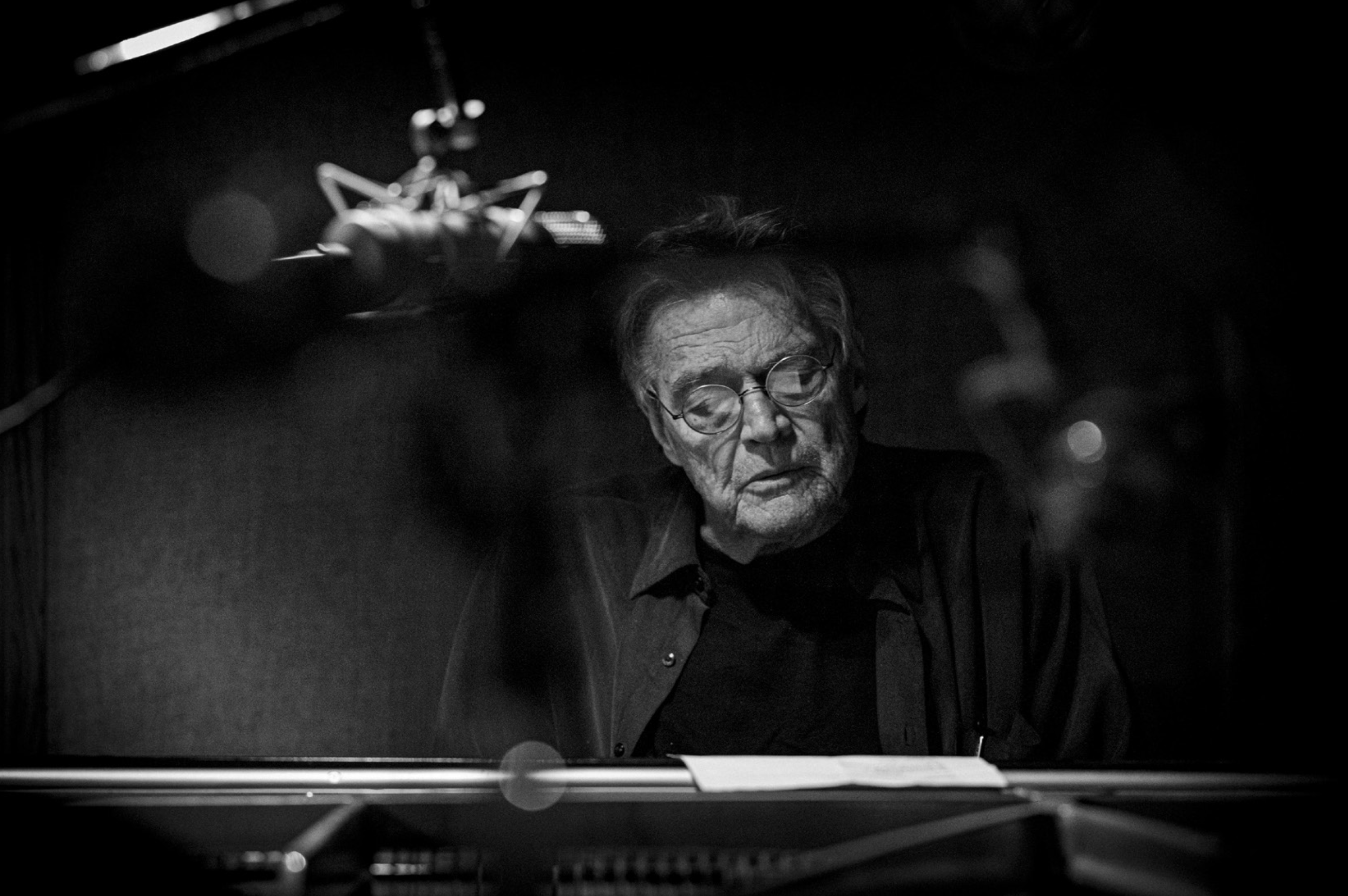
Terry Allen at Arlyn Studios in Austin in May 2019. Photo by Barbara FG

Maybe you’ve seen Terry Allen’s work.

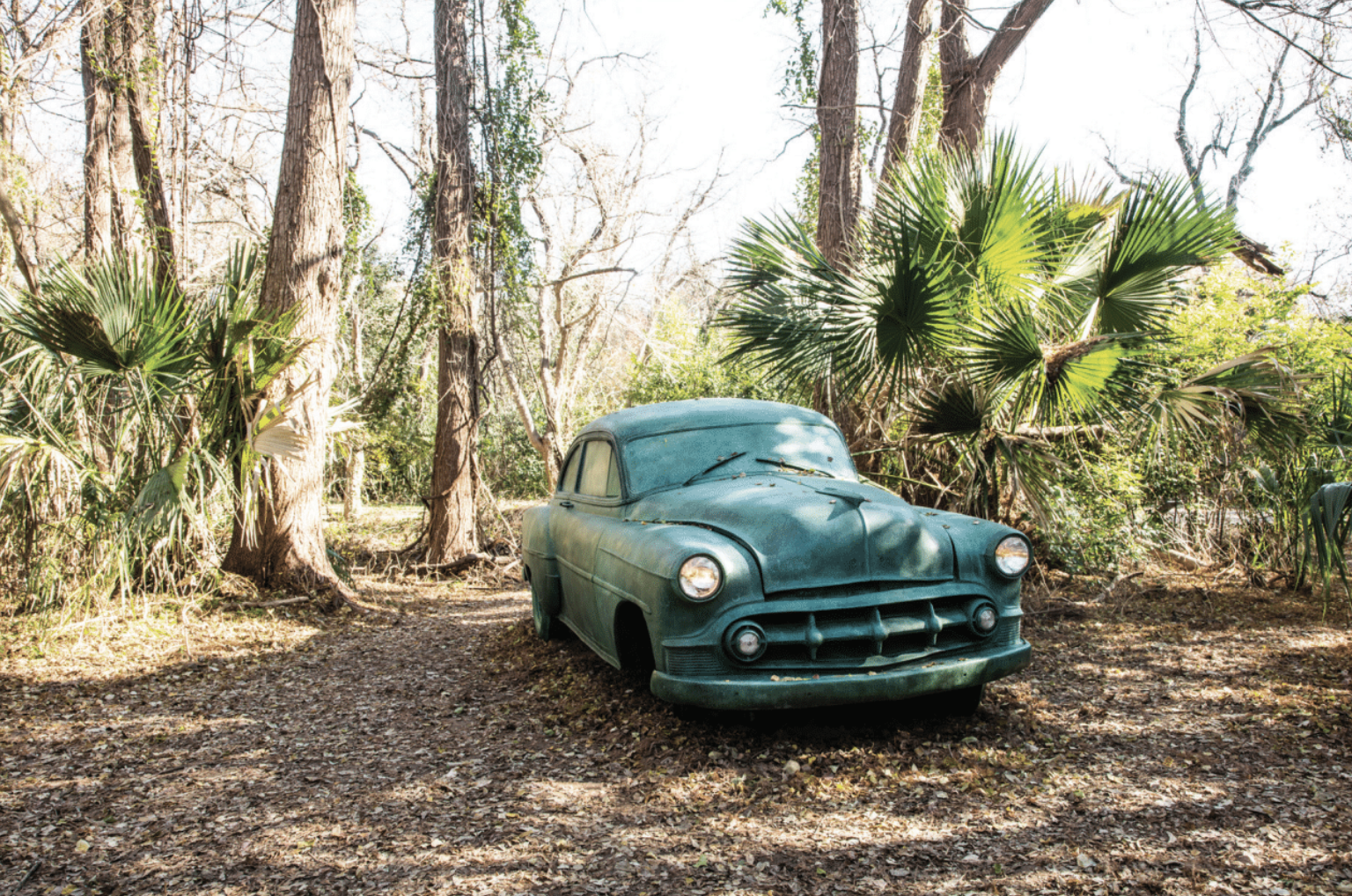
His sculpture Caw Caw Blues, which contains the ashes of his friend Guy Clark, stands sentinel at the entrance of The Wittliff Collections at Texas State University in San Marcos. Countree Music, a 25-foot bronze cast of an oak tree and a map on the terrazzo floor depicting Houston as the center of the world, accompanied by music, is planted in Terminal A near Gate 17 of Bush International Airport in Houston. Passengers entering security gate D30 in Terminal D at DFW International pass under a 30-foot bronze wishbone titled Wish. A life-size statue of CB Stubblefield of Stubb’s BBQ fame stands on the site of his first restaurant on East Broadway in Lubbock. Nestled in the palmetto palm thicket outside The Contemporary Austin-Laguna Gloria on the banks of Lake Austin is Road Angel, a bronze cast of a 1953 Chevy coupe, the car Allen drove as a teenager, accompanied by more than a hundred audio soundbites (including one of mine), that was permanently installed in 2016.


More likely, you’ve heard Allen’s work.

His song “Amarillo Highway,” about a “Panhandlin’ man-handlin’ post-holin’ Dust bowlin’ Daddy” is a much-covered Texas country classic. The churning “New Delhi Freight Train” was first recorded by the rock band Little Feat. At 80, he’s still out there performing with his Panhandle Mystery Band which includes family and friends, among them son Bukka Allen, pedal steel maestro Lloyd Maines, guitarist Charlie Sexton, and fiddler Richard Bowden— often in conjunction with an art opening.

You may have even seen Allen without realizing it. He and his wife Jo Harvey Allen play Oklahoma couple Aunt Annie and Uncle Jim in the Martin Scorsese film Killers of the Flower Moon.

He’s been awarded a Guggenheim fellowship and is in the West Texas Walk of Fame by the Buddy Holly Center in Lubbock. Texas Tech is finalizing plans for the Terry and Jo Harvey Allen Center for Creative Studies.

Call him what you want: the patriarch of Lubbock creatives, the greatest living visual artist from Texas, the other Texas music godfather besides Willie, the storyteller of the American West. It’s all pretty much true.

In 2016, Allen created Road Angel which can be seen at The Contemporary Austin-Laguna Gloria. Photo by Brian Fitzsimmons/courtesy of The Contemporary Austin


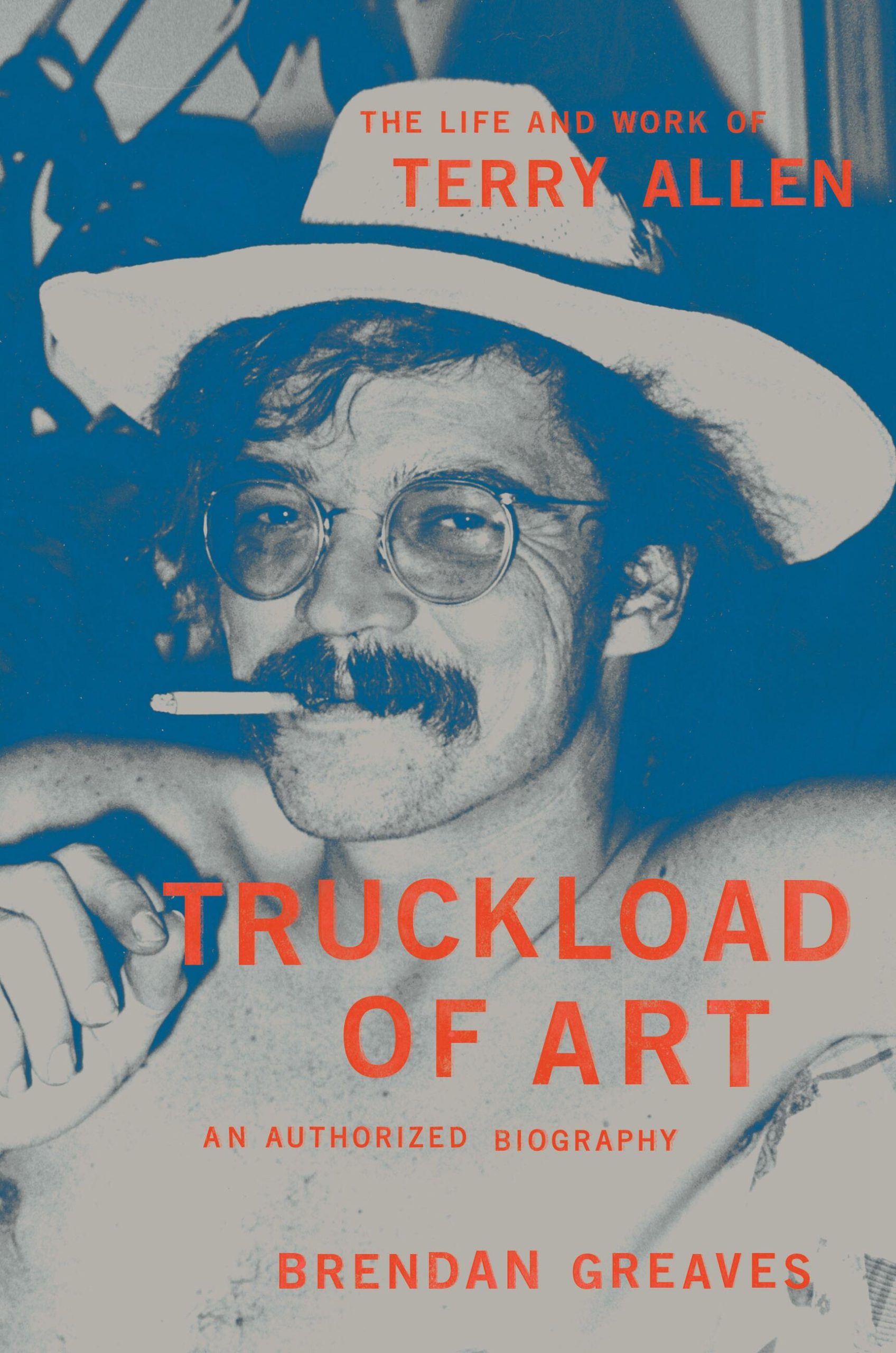
Now comes Truckload of Art, a 500-page biography by Brendan Greaves, to explain it all.

The first Terry Allen art I ever saw made me laugh out loud. The Paradise was a stark diorama of three spaces, the primary space—a parking lot—bathed in red light with the word “Paradise” in pale blue neon script on the back wall as the centerpiece. Directly below is a planter with three measly cacti, two plastic palms, a car tire, and a pair of plastic flamingos. Flanking the planter were doors marked Lounge and Motel in red neon. Beyond the vinyl-covered doors was a motel room with shag carpeting and a honky-tonk bar space with a jukebox. Paradise was part of The Great American Rodeo Show at the Modern Art Museum of Fort Worth in 1976. Eleven artists were given a year to develop a rodeo-inspired piece. Allen paid homage to the kind of spaces where a real rodeo cowboy would feel at home.

The first Terry Allen music I really paid attention to was the 1979 album Lubbock (on everything), marking the artist-musician’s return to his hometown to collaborate with a new iteration of Lubbock music makers, among them singer-songwriter Jimmie Dale Gilmore, who was two classes behind Allen at Monterey High. “I always knew I was destined to write songs,” Gilmore told me recently. “But I thought you had to be really old to be a songwriter. Terry was the first person I saw perform original music. He sang ‘Red Bird’ while playing piano one day at Monterey. That really inspired me.”

Allen and Jo Harvey had been living in Fresno, California, when he came back to make Lubbock (on everything). He instantly became the Don of the Lubbock Mafia of music maker. The Allens eventually moved back—sort of—settling some years later in close-enough Santa Fe.

It’s hard to ignore the tall polymath with stooped shoulders, the piercing eyes of a hawk, and a wide rubbery mouth that can hardly contain his unapologetic flatland twang. Art and music are the same coin, as far as he’s concerned, means to tell stories, which he is very good at doing, in many different ways. He’s so prolific, and so driven to create, he demands to be heard.

Greaves is founder and owner of Paradise of Bachelors Records in Chapel Hill, North Carolina, which has reissued Allen’s older recordings and released his most recent albums 2013’s Bottom of the World and Just Like Moby Dick in 2020. Greaves, a self-described “lapsed art worker,” met Allen through the gallery where he worked. He’s collaborated on several projects with Allen and received a Grammy nomination for his liner notes, but taking on the monumental task of telling a very dense story while explaining the dual worlds of art and music, working off journals Allen has kept since junior high, was a whole other deal.

Allen’s father, Sled, a former minor baseball player who promoted wrestling and music events in West Texas, including Hank Williams, Ernest Tubb, T-Bone Walker, Jimmy Reed, Ray Charles, Little Richard, and Elvis Presley, who Terry met on one of the six times he played Lubbock in 1955-56, long before most of the world knew who Elvis was. His mother, Pauline, a onetime professional piano player and full-time alcoholic, was 18 years younger than her husband. The biography shows how both inform Allen’s love of performance, his skill at promotion and showmanship, but most of all, his creative drive, providing the inspiration for his DUGOUT series of works.

Allen got his art education at Chouinard Art Institute (now California Institute of the Arts) in Los Angeles. One professor brought visiting Dadaists and surrealists such as Marcel Duchamp, Max Ernst, and Leonora Carrington to lecture. The surrealist Man Ray often stopped by the school to talk to students about the life of an artist. Allen was hooked.

Concurrent with his Chouinard schooling was his pursuit of music. The first song he ever wrote “Red Bird” scored him an appearance on the music television series Shindig! in 1965, generating enthusiasm from Brian Epstein, the manager of the Beatles.

In 1969, he wrote “Truckload of Art,” a song about a real truckload of art from New York destined for Los Angeles to show the upstart West Coast artists how art was supposed to be done, that crashed on the highway. Two years later, a snippet could be heard coming out of the radio of Warren Oates’ GTO in Two-Lane Blacktop, an arty feature film about street racers on a road trip across the southwest.

After graduating from Chouinard in 1966, he began teaching there and followed by teaching gigs at UC-Berkeley and Cal State Fresno.

Truckload of Art focuses on relationships, beginning with Allen’s partner in crime and marriage, the toothsome Jo Harvey. Theirs has been a tempestuous, sometimes competitive coupling while he chased myriad muses and she pursued her career as an actor, playwright, poet, radio producer, and songwriter—whenever they weren’t working together. He thought she should perform only original pieces she created. She enjoyed working in film.

Also documented is Allen’s long friendship with Dave Hickey, the acerbic writer, dealer, curator, and university professor from Fort Worth who opened A Clean, Well-Lighted Place gallery in Austin in 1967, and became the most incisive art critic of his time. Like Allen, Hickey wrote country songs, too.

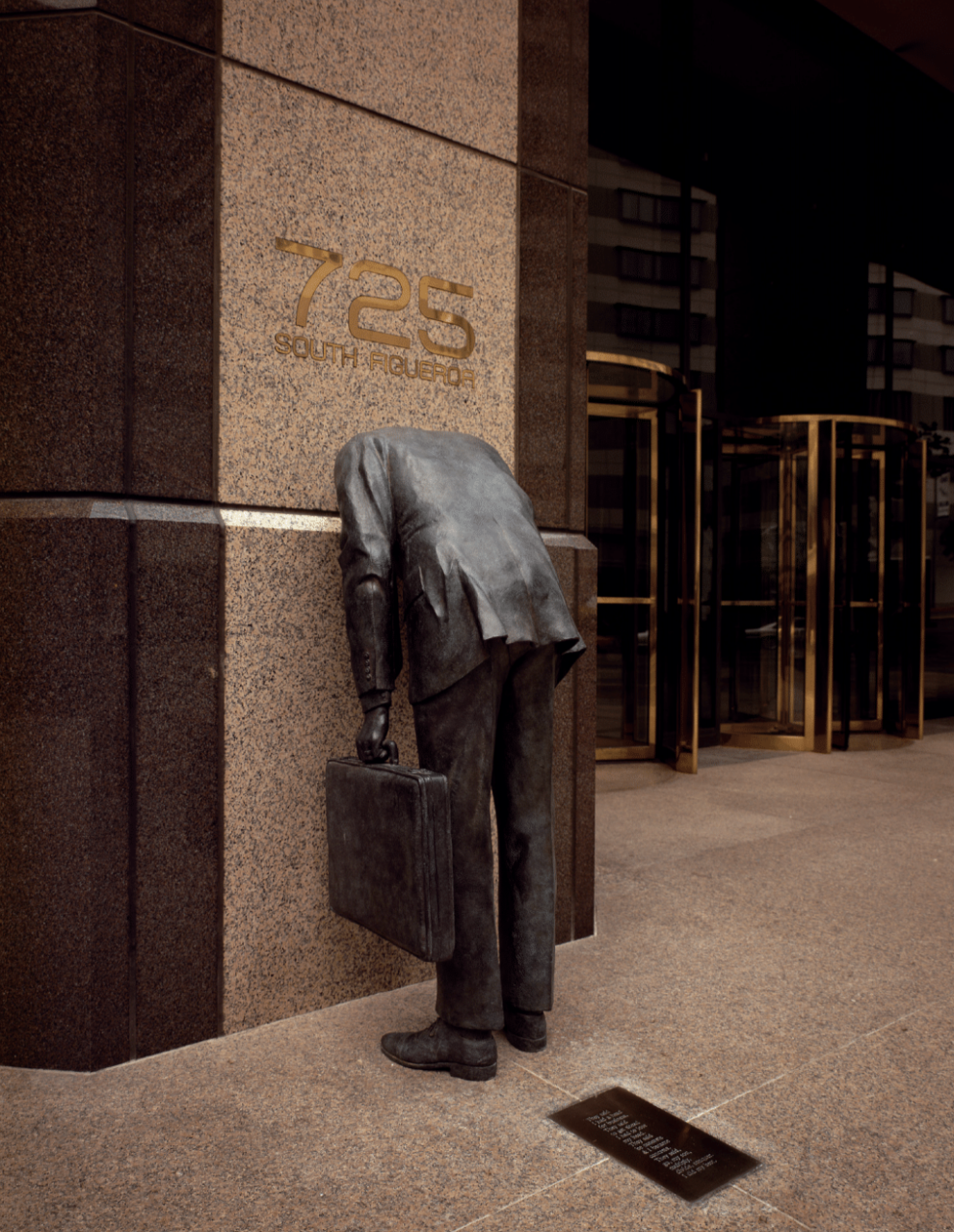
Allen’s Corporate Head outside the Citicorp Plaza in Los Angeles. Photo by William Nettles

I’m not schooled enough to pass judgement on the art beyond my immediate reaction, and Allen usually makes me laugh. That was the immediate response when I saw Corporate Head, the life-size bronze of a businessman burying his head in the wall of a Los Angeles office building. The publication Atlas Obscura describes the work as “almost whimsical, yet rather grotesque.”

Sometimes the work has an edge too sharp to appreciate. That speaks to Allen’s interest in Antonin Artaud and his Theater of Cruelty, which strived to “shock the audience.” Allen was drawn to Artaud’s 1937 travelogue A Voyage to the Land of the Tarahumara about time spent in Mexico among the Tarahumara people experimenting with peyote. His curiosity led to staging his own play about Artaud Ghost Ship Rodez in Lyon, France.

The downs are as interesting as the ups. Juarez, the first of 13 albums he’s recorded, failed to launch as a Broadway musical, despite his collaboration with David Byrne, best-known as the lead singer of the band Talking Heads. The run of the 1994 theatrical play Chippy: The Diary of a West Texas Hooker, co-written with Jo Harvey for the American Music Theater Festival, turned out to be brief, but yielded the song “Fate with a Capital F” cowritten with Joe Ely and Butch Hancock, which remains one of my favorite Allen songs.

Some sweet bits pass by too quickly, such as Byrne’s bewilderment participating in a guitar pull with Allen and friends, and Allen’s dust-up with Tommy Lee Jones over verisimilitude. And I would have enjoyed eavesdropping on Hickey and Allen debating art.

It’s the little things that impress. Allen played in a band in high school with David Box, the teen chosen to replace Buddy Holly in the Crickets after Holly’s death in a plane crash in 1959, only for Box to die years later in a plane crash. In 1972, he played the Dripping Springs Reunion, the precursor of Willie Nelson’s Picnics, thanks to a Dave Hickey booking. Even Andy Warhol and the Manson Family make cameos. He’s been everywhere—Cambodia, France, London, Mexico, and India, telling stories every which way. And he took notes.

With Greaves’ help, Allen tells his most compelling story yet, the story of his creative life.

Continue Reading

John Lomax 3 and the Family Tradition

https://texashighways.com/travel-news/with-new-performances-john-lomax-iii-fuels-the-lomax-family-legacy-of-preserving-american-folk-songs/

John Lomax III photo by Amanda Lomax.

John Lomax III has been part of my music life for half a century. We were both budding music journalists for Country Music magazine back in the 1970s, and he’s one of those displaced Texans I’d see whenever I visited Nashville over the decades. Every time, it seemed, he was into something new and cool: seguing from writing to managing artists like Townes Van Zandt, Steve Earle, David Olney, The Cactus Brothers, Kasey Chambers, and dulcimer player David Schnaufer (“He reinvented the instrument much as Earl Scruggs did for banjo,” John III says); hanging out with terrific Texas singer-songwriters like Guy Clark and Nanci Griffith; doing licensing deals; overseeing reissues; running an export record enterprise; teaching at Middle Tennessee State University.

Over all that time, I’ve never asked much about his family legacy, thinking John would probably be tired of the subject, since he was the grandson, son, nephew, and father in the first family of American music folklore. It was a surprise, then, to hear John Lomax III tell me in his thick, distinctive drawl that he made his debut performing in front of a live audience at the age of 77, singing songs and telling stories about the Lomaxes at a house concert near Nashville last month.

“Can’t sing for beans, but it’s not about the singer,” he admits from the start. “It’s about the songs and the heritage of our shared culture.” That translated into 19 songs and numerous stories over 85 minutes, performed in front of 20 people. “Seventeen of them strangers,” Lomax points out.

Now, with an Aug. 18 booking at Crystal Bridges Museum in Bentonville, Arkansas, as opening act for Michael Martin Murphey, and two October dates confirmed for Houston, the “Lomax On Lomax Show” appears to have legs. John III is learning more songs that were documented by elder Lomaxes and polishing stories about his family, who emigrated to Texas from Mississippi by covered wagon in 1869 and settled on a small farm in the Bosque River valley near Meridian that backed up to the Chisholm Trail during the era of cattle drives. Proximity to cowboys and a good ear were all the first John Lomax needed.

“Grandfather would hear the cowboys singing at night to keep the cattle calm,” John III recounts. “He started sliding out of the house to hear the songs better, somehow worked out a way to remember the melodies without musical training or books, and wrote down the words.” Putting to paper what he heard was the birth of the academic disciplines of ethnomusicology and folklore.

“My grandfather chased cowboy songs, riding on horseback with a tape machine tied to the front and back,” John III says. “He collected a lot along the Brazos. Grandfather’s father was a tanner. He described them as ’the upper crust of poor white trash’ in Adventures of a Ballad Hunter, John Avery’s 1947 autobiography, reissued in 2017 by University of Texas Press. A Black farmhand taught John Avery a whole lot about Black music.

“From there, the story goes to Alan, Bess, my dad, my brother, Joe (who published For the Sake of the Song: The Townes Van Zandt Song book), and me; and now a fourth-generation Lomax, John Nova, with his work at the Houston Press, Texas Monthly, and Texas Highways, where he is a writer-at-large.”

The 17,000-plus field recordings John III’s grandfather and his uncle Alan made for the Library of Congress are the gold standards of American music, capturing the diversity of songs and music makers across the United States before recording became commonplace. John Sr. discovered the musician Huddie Ledbetter, known as Leadbelly, and helped secure his release from Angola prison in Louisiana to launch his performing career, becoming one of the first artist managers some 90 years ago. Alan is credited with championing blues artists Robert Johnson and Mississippi Fred McDowell among others and was the first to record Muddy Waters. He befriended folk singers Woody Guthrie, Bob Dylan, and Burl Ives as well.

John III’s father, John A. Lomax Jr., sang folk songs, co-founded the Houston Folklore & Music Society, and managed blues giant Lightnin’ Hopkins, among other achievements. John III left Houston in 1973 for Nashville and a gig as publicist for storied producer and wildman Jack “Cowboy” Clement. Forty-nine years later, he has returned to Houston for an extended stay.

Coinciding with his performing dates at Rice University on Oct. 6, and for the Houston Folklore & Music Society on Oct. 8, John III is aiming to release a second, limited-edition vinyl-only album. The album will feature recordings his father made from recently discovered Peter Gardner tape reels of Houston Folklore programs and other events from the mid-’60s.

“Peter would have people come over to his house and sit around and sing, and it would go out over the air on the radio,” John III says. “It’s impressive how many people got their start at Houston Folklore: Guy Clark, Nanci, and Townes, Lucinda [Williams], Steve Earle, Richard Dobson, and KT Oslin. Lightnin’ Hopkins and Mance Lipscomb were regular Folklore Society performers.”

While John III’s father and late brother Joe were both recognized folk singers, John III comes late to the game—but he’s fully aware of his role. After his export record enterprise “got eaten by streaming,” he started looking for something else to do. “I’m the last male left from that generation to get out there and do this—keep the songs alive, keep the legend alive, embellish the brand,” he says. “I got to trying to sing, putting on headphones, listening to my dad, singing along with him to get the timing.”

Like his father and grandfather, he sings a cappella. He first performed publicly five years ago when he put out FOLK, an album of 16 of his dad’s home recordings. “I did a few things to flog it and got on Michael Johnathon’s WoodSongs Old Time Radio Hour on their anniversary show—me and Roger McGuinn,” he says. “I knew one song, ‘Buffalo Skinners.’”

His song list has grown considerably. “It’s come really easy,” he says. “I’ve heard these songs all my life. It’s all about the song. It’s about the stories of this one family, how we started, how we’re still at it 100 and some odd years later.”

For the format of the “Lomax on Lomax Show,” John III keeps it simple, starting off with cowboy songs. “‘Home on the Range’ was first published in a book by my grandfather in 1910,” he says. “I sing that but skip the verse everyone knows and do two or three verses that are rarely heard. They’re just as nice and pretty as the standard old ‘deer and the antelope play.’”

He then segues into Leadbelly, which leads to his uncle Alan. “[He] was the first to record ‘Sloop John B’ in 1935 in Nassau [Bahamas],” John III says about the song that became best known for the Beach Boys version. “Then I sing some songs my dad used to sing, then a Townes song, ‘Two Girls,’ because there’s a funny Doug Sahm story to it, and ‘My Old Friend The Blues,’ one of Steve Earle’s underappreciated gems. I close with this incredible song Ed McCurdy wrote in 1950 that’s on the second album of my dad’s recordings from 1965, ‘Last Night I Had the Strangest Dream.’”

In between he summons up obscurities such as “The Frozen Logger,” which was recorded by Johnny Cash and Elvis Presley, and Leadbelly’s “Roosters Crows at Midnight.” He’s also working out “Chisholm Trail.” “It’s not very obscure, but, really, the whole thing is obscure to the general public,” he says. “People in the business know some of these songs. The ‘Ballad of the Boll Weevil’ and ‘Sloop John B’ are the only two songs I do that were big hits, but that was nearly 60 years ago. … I want to keep these songs alive, because they’re so cool. This is America. Come on, let’s keep this thing going, folks.”

Songs uncovered by the Lomaxes continue to resonate in modern music, often through sampling. For instance, “Rosie,” which Alan Lomax recorded at the Mississippi State Penitentiary (also known as Parchman Farm prison) in 1947 and released on the album Prison Songs: Historical Recordings from Parchman Farm 1947-48 Vol. 1: Murderous Home, was sampled on the 2015 song “Hey Mama,” a massive hit by David Guetta that featured Nicki Minaj, Bebe Rexha, and Afrojack.

“That has actually generated more income than any song in the whole Lomax canon, more than Leadbelly’s ‘Midnight Special’ or ‘Goodnight Irene,’” John III says. “It was a hit in 18 countries.”

And on her 2016 song “Freedom,” with Kendrick Lamar, Beyonce sampled “Stewball,” sung by Prisoner 22 and recorded by Alan Lomax and his father at Parchman Farm in 1947. The phrase the song draws its title from can be found in “Collection Speech/Unidentified Lining Hymn,” performed by Reverend R.C. Crenshaw and recorded by Alan Lomax in 1959.

The more John III talks about the family legacy, the more the pride comes through. “You’ve got this one family now in its fourth generation steadily helping to preserve, promote, publicize, and otherwise draw attention to these wonderful songs, the people who created them, the people who sang them,” he says. “It’s something no one is really doing.”

Continue Reading

The Many Threads And Generations Of Chicano Soul, All In One Place

My story for National Public Radio Music’s webpage on Adrian Quesada’s Look At My Soul show at Lincoln Center, along with Black Pumas, Grupo Fantasma, Brownout, Brown Sabbath, and Johnny Hernandez and Ruben (El Gato Negro) Ramos

NPR Music’s story

More than half a century after it crept into the DNA of young Mexican-Americans in the southwestern United States — particularly in Southern California and Texas — Chicano Soul endures. Chicano Soul in California has been well-documented, in Ruben Molina’s book Chicano Soul and in several documentaries. The Texas version happened away from media and music limelight as a wonderfully provincial scene unto itself, and persists through events like the Friday Night dances at Pueblo Hall in San Antonio, retro bands like Eddie and the Valiants and the San Antones, and through DJs such as the Austin Boogie Crew, Jason Saldana’s El West Side Sound in San Antonio and the Fistful of Soul collective in Houston — all spinning vintage tracks in clubs across the state.

Three Songs That Define California Chicano Soul

Cannibal and the Headhunters, “Land of 1,000 Dances”
Thee Midnighters, “Jump, Jive and Harmonize”
The Blendells, “La La La La La”

No look back, though, is as far-reaching and ambitious as The Look at My Soul: The Latin Shade of Texas Soul album project, hatched by 42-year-old, Austin-based producer-writer-arranger-guitarist Adrian Quesada. Released late last year on Nacional Records/Amazon Music, the album will be performed live for the first time at Lincoln Center in New York this Saturday (July 27), with a cast that includes first-generation Chicano Soul stars Ruben Ramos, El Gato Negro (The Black Cat) and Johnny Hernandez from Little Joe and the Latinaires.

Three Songs That Define Texas Chicano Soul

Sunny and the Sunliners, “Talk To Me”
Little Joe and the Latinaires, “Ain’t No Big Thing”
Royal Jesters, “Meet Me In Soulsville”

Quesada will also be performing with one of the opening acts, the Black Pumas, his new band with lead vocalist Eric Burton. Black Pumas are standard-bearers of the psych soul sound buzzing around Austin; dominated by mid-tempo ballads, along with tinges of psychedelia, funk and groove – a sound that could easily pass for a new version of Chicano Soul. But in no way is this your parents’ Tejano.

Three Songs That Define Modern Texas Psych Soul, a.k.a. New Chicano Soul

Black Pumas, “Colors”
Grupo Fantasma ft. Tomar Williams, “Let Me Be Me”
Los Coast, “Monsters”

The mothership of this Latin-funk-soul-R&B mashup is Grupo Fantasma, a nine-piece horn band founded by Quesada, Greg Gonzalez and Beto Martinez in 2000. All three had grown up in the border city of Laredo, each smitten with modern music, like any American kid in the ’80s. “[In Laredo] we listened to the radio, Red Hot Chili Peppers, Beastie Boys, Nirvana,” Gonzalez tells me. “People in Laredo listened to mariachi, rock and roll, heavy metal and funk.” Cumbias, the dance rhythm that dominates Latin music globally, were also an unconscious part of their border town upbringing. Teenagers could party and drink alcohol across the river in Nuevo Laredo, Tamaulipas, Mexico. “The best live bands [in Mexico] were Colombiana bands with keyboards and guitars and accordion,” Gonzalez says. “It was cumbia played with a full ensemble, almost a Tejano instrumentation with Colombia music.”

Grupo Fantasma.
Sarah Bork Hamilton/Courtesy of the artist

Gonzalez and Martinez became friends in eighth grade in public school as fellow metalheads. Quesada was a year older and attended St. Augustine, the Catholic school. After graduating, they all met in Austin in 1996, where they were chasing the music muse.

“We were playing funk, rock and roll, hip hop, psychedelic, fusion,” Gonzalez tells NPR. With Martinez, he started a band called the Blimp. Quesada had a jazz group called Blue Noise. The two shared bills, then started playing together as a funk band that liked to test limits. The common bond was their new shared obsession with cumbias.

We wanted to be a party that everyone was invited to.

“We rediscovered Colombian cumbias through some compilations some friends had,” Gonzalez said. “There was a Latin music scene in Austin, but it excluded people who weren’t part of that scene,” Martinez recalled. “If you didn’t dress right and go to the salsa club, then you couldn’t appreciate that music. That turned us off. We wanted to be a party that everyone was invited to. You didn’t have to understand any dance moves or know Spanish. We wanted to make a sound that incorporated all our influences and didn’t exclude anybody. ”

Their response was the Night of Cumbias, performed every other week at a small Sixth Street club called the Empanada Parlor. By the third gig, a line outside the door was the norm. Their debut album, Grupo Fantasma from 2002, was followed by relentless roadwork, beginning in the southeastern and northeastern United States, helping put Grupo Fantasma on the map. “These cumbia rock shows in these divey punk rock clubs covered in stickers were rowdy,” Beto Martinez says. “We started pulling people in places like Hattiesburg, Mississippi and Atlanta. When we got to New York, there was this big packed house waiting for us.”

A year later, Grupo Fantasma formed a second band. “Brownout was a respite,” says Gonzalez of the project. “After we had delved into the cumbia, and started expanding our palette of Afro-Latin music all sung in Spanish, Adrian and I wanted a funk band like we had before. We wanted to play that too, minus the cumbias and the Grupo Fantasma style. We were playing so much with Fantasma, it was a much-needed outlet. We came up with a list of our favorite breakbeat and funk 45s and started doing parties. It was freakier, funkier and all instrumental.”

Grupo Fantasma’s cumbia obsession would be followed by further explorations — into salsa, merengue, bomba, and other Afro-Latin ritmos — after Jose Galeano, a Nicaraguan living in Austin, joined three years into the band’s life as singer and timbalero. “He chose a lot of music and opened our eyes to some of those sounds,” Gonzalez said. “He’s the nephew of Jose Chepito Areas, the percussionist for the original Santana who was part of that taking the Latin style and incorporating it into rock and roll and blues genres. He brought to us the concept how you blend those sounds. That was sixteen years ago. Since then, everybody has become a lot more sophisticated.”
Grupo Fantasma Masterfully Adapts Funk On Its Vision Of ‘American Music Vol. VII’
First Listen
Grupo Fantasma Masterfully Adapts Funk On Its Vision Of ‘American Music Vol. VII’

Late in 2006, Grupo Fantasma got a call. From Prince. Well actually, it was Prince’s management, relaying the message that Prince would like to fly the band to Las Vegas to play at his 3121 Club on Thanksgiving night. The band didn’t see Prince that first gig, but he was watching and listening — and subsequently invited Grupo Fantasma to play the club every Thursday. Grupo did the gig for six weeks before meeting its benefactor. One evening in the middle of a set, His Purple Majesty walked onto the stage with his guitar, asking “Is it cool?” before launching into a Hendrix-style jam and enigmatically departing again. “He knew all the lines,” Beto Martinez recalls. “He’d practiced what we were playing.” In a matter of weeks, Grupo Fantasma became Prince’s go-to horn section, flying to Vegas every Thursday, playing with Prince at a Golden Globes party in Los Angeles (with sit-ins from Mary J. Blige, will.i.am and Marc Anthony), at a Super Bowl party in Miami, another party in London, at Coachella — over the course of a year, wherever Prince asked, they were there.

We’re from here. We’re a product of all these influences. Ultimately, it’s American, in the sense that jazz is.

Grupo Fantasma was no longer just a Latin funk band. With the Prince connection, they were the funk. Through it all, the band has resisted labels and being pigeon-holed, evidenced by the title of the latest album, American Music, Volume 7 (Blue Corn), its seventh.

“Everybody wants to put us in this nice category,” says Beto Martinez, fresh off a three-week tour of Russia and Turkey that included stops at the Mongolian border, Siberia, Moscow and Istabul. “That’s what’s behind the title of the record, being lumped into this Latin music category, dismissing all the various influences. We’re from here. We’re a product of all these influences. Ultimately, it’s American, in the sense that jazz is.

“In Russia, people asked us, ‘Where you from,’ ” Martinez continues. “We’d say, ‘We’re from Texas.’ ‘But where in Texas, like what’s your ethnicity?’ I’d say, ‘Mexican-American’ and have to explain that. Then it would be, ‘Texas is full of cowboys, it’s the capital of country music. How does it feel to be a strange band in Texas?’ We had to talk about how Texas is huge and very diverse, how Texas shares a giant border with Mexico. We’re a good representation of that diversity — a few of us are from the border, a couple guys are from California, our drummer John [Speice] is from Oklahoma and wears a cowboy hat.”

“We’re more well-received outside the United States,” says Greg Gonzales. In America, “we’re a Latin band that sings in Spanish. There [in Russia and Turkey], Spanish and English are both foreign languages. They’re just hearing the music. They’re not thinking, ‘This is Latin. I have to dance salsa.’ It’s more like, ‘Wow, this is awesome music.’ They see us as an American band. A lot of people thought it was jazz. We’ve got a horn section. We’re American. The music borrows heavily from African music, funk, soul, rock and roll that all essentially came from jazz. Seventy-five percent of our songs are in Spanish.”

In 2013, as Grupo Fantasma changed management and its record label Nat Geo Music folded, Adrian Quesada left the band, burned out from the road and wanting to pursue studio projects and produce. It was time for an extended break. During the downtime, Brownout, which had gained a vocalist, did a residency at Frank in downtown Austin, playing a different theme each night. The final night’s theme was Black Sabbath, an idea that took hold, then took off, as Brownout morphed into Brown Sabbath, playing Black Sabbath songs with a Latin groove — and finding their biggest audience yet, practically eclipsing the whole Grupo Fantasma juggernaut.

Last year, Brownout applied the Brown Sabbath concept to one of their favorite groups growing up, Public Enemy, for the album Fear of a Brown Planet.

The Money Chicha project followed Brownout and Brown Sabbath. “We discovered this style called chicha from Peru from the ’60s and ’70s,” Gonzalez says. “Peruvians wanted to play a blend of their indigenous music from the mountains with the song form rhythms of Latin America, cumbias, salsas, stuff like that, along with fuzz guitar and psychedelic effects, lots of reverb. It was all guitars, no horns. We got so obsessed with chicha that we started another band. The joke was, lets book some gigs, because that’s how we normally force ourselves to learn something like this. We booked these gigs and needed a name. Our other bands had nine people, this had only five, so we’ll finally make some money.”

Even though Quesada had left Grupo Fantasma, he continued playing with Brownout and Money Chicha until a couple years ago, when his plate was full. He was looking back with one project, the Look At My Soul album, and looking forward with another, the Black Pumas.

Eric Burton had arrived in Austin in October 2015, after busking on the street in Santa Monica. After six months of playing farmers’ markets, open mics and solo shows, he met Quesada. They instantly clicked. “He had a few instrumentals he was working on that he wanted to see if I could sing on,” Burton says. “I was expecting that if it was a success it would turn into some publishing deal for both of us. I didn’t realize he had 17 instrumentals he was sitting on after our first session. We kept at it until we filled most of those instrumentals he had. The songs almost write themselves.”

Black Pumas brought stability into the 28-year-old singer-songwriter’s life. “When you’re busking, or playing music in general, you have to have thick skin,” Burton says. “You’re always moving, shifting, trying to get by on the power of the song and the generosity of the people. Austin has given me a home where I can develop as a singer-songwriter and be rooted.”

Quesada had been looking for a voice for music he’d composed that didn’t fit into the Look at My Soul concept he was working on. “I went off on a tangent,” he says. “Those were the Black Pumas songs. I’d met Eric. He was originally writing and singing on my songs, and then he started bringing in his songs. That’s what really kicked it into high gear – my production and his songwriting.”

The two recorded together for several months. “The intentions were pure,” Quesada says. “I didn’t show anybody any of this music for half a year. I didn’t even know Eric was an incredible front man.”

Look at My Soul had been on Quesada’s radar ever since Grupo Fantasma did a taping with Ruben Ramos for the Austin Latino Music Association, 16 years ago. “That’s when Adrian and I started talking about what we’re doing right now,” the 79-year-old Ramos says.

“I heard Ruben talking about growing up, listening to rock and roll and soul music, Little Richard and Jimmy Reed and blues,” says Quesada. “In my head, I imagined somebody like Ruben Ramos grows up singing mariachi music and regional Mexican music all their life. I saw the parallels. For us, back in the Grupo Fantasma days, we grew up listening to hip-hop, rock and roll, heavy metal. We didn’t really embrace [Latin sounds] until we were older.

“I realized all these guys – Ruben, Little Joe – opened doors for us. Our story was similar to theirs. We discovered who we were a little bit later, musically. That planted the seed way back when. I thought it would be interesting to make that connection.”

Quesada collected classic recordings by Ramos, Little Joe and the Latinaires, Sunny and the Sunliners, the Numero Group’s reissue of the Royal Jesters, and the Texas Funk compilation featuring Latin Breed, and studied them. “You can hear the progression, where the music turns into Tejano music, but early on, these bands always had a soul song or funk song, right after a cumbia. It would be common to hear the Meters’ ‘Cissy Strut’ after a mariachi or ranchera. I was fascinated by the history, learning my own roots, what came before my friends and me started doing this music. I had enough information to connect my generation with theirs.”

In this time, in this era, where there’s more and more division happening, especially in Texas and along the border, even though Chicano Soul sounds like people would be excluded from it, it’s actually an inclusive scene.

Listening to Little Joe and the Latinaires records, he realized Little Joe’s brother Johnny Hernandez sang the soul numbers. Hernandez came to Austin to add his vocals, singing lead on “Ain’t No Big Thing,” which he’d sung with the Latinaires. “I hadn’t recorded live in the studio like we did in the old days for decades,” he says. “It was a thrill getting into the studio [with Quesada, Charlie Sexton and Michael Ramos]. It took me back to my roots. When the horns came in on the introduction, I was right back there in 1965.” Saturday’s gig at Lincoln Center will be the first time Hernandez has performed in New York.

Look at My Soul is just the start. “I need five volumes to tell the story I want to,” Quesada said. “I feel like this is episode one of a Ken Burns miniseries. Originally, my idea was to revisit the old songs and re-record them, but I spent a summer writing a bunch of songs inspired by the styles I was listening to. This is now a lifelong journey to explore. In this time, in this era, where there’s more and more division happening, especially in Texas and along the border, even though Chicano Soul sounds like people would be excluded from it, it’s actually an inclusive scene.”

Black Pumas, on the other hand, are not a Chicano Soul band, at least as far as Eric Burton is concerned. “I don’t feel like it’s Chicano music at all. It’s black music.”

Then again, Burton wrote the title track for Look at My Soul, and sings lead on the title song.

These old and new strands, along with the Grupo Fantasma legacy, will converge on Saturday — Greg Gonzalez joins the Look at My Soul band on the heels of a Money Chicha gig in Austin; on August 2, a week after Lincoln Center, Gonzalez joins Martinez, fresh off some European dates with Golden Dawn Arkestra; then a reconvening with the rest of the Grupo Fantasma/Brownout aggregation in Johnstown, Pa. for a Brown Sabbath show at the Flood City Music Festival.

“We’re kind of schizophrenic,” laughs Gonzalez.

Black Pumas will be on tour through the end of the year. “I’ve been doing this long enough not to get too excited,” says Adrian Quesada. “As much as I like to multitask and stay busy, I feel like I’m too old to jump from one thing to another. But it’s worked out. Black Pumas were on the Billboard charts the week the album came out. That’s a first for me. I’ve been looking out at the crowds and people have been singing along with the songs.”

And he knows when the Black Pumas tour wraps, those four unfinished volumes of Chicano Soul will be waiting.

Continue Reading

Roky Erickson

Roky Erickson, founding father of Texas Psychedelic Music, lead singer for the trailblazing 13th Floor Elevator, and the most famous dropout William B. Travis High School in Austin has ever had, departed for a higher plane recently.

Back in 2013, I wrote extensively liner notes for three Roky reissues from back in the 80s for Light In the Attic Records – The Evil One, Gremlins Have Pictures, and Don’t Slander Me. Light in the Attic has graciously allowed me to publish those liners notes here, with the reminder that all three reissues are still available for purchase. Light In The Attic Records

The Evil One

Gremlins Have Pictures

Don’t Slander Me

Continue Reading