Texas Music Hour of Power Sat nites 7-9 pm central KRTS Marfa KWVH Wimberley and anytime here

tmhoposterofficial


www.marfapublicradio.org

www.westtexaspublicradio.org

www.wimberleyvalleyradio.org

www.kwvh.org

www.klkt.org

www.kkyl.org

www.kpft.org

Every Saturday nite, yours truly hosts the Texas Music Hour of Power, showcasing all kinds of Texas sounds created over the past century of recorded music. The show runs two hours because Texas spans two time zones and frankly, the music is too dang big to limit it to one hour.

Continue Reading

Joe Ely

Joe Ely died the other day. He was a big part of my musical life. There’s more to say, and I’ll say more sooner or later, but here’s what I wrote when I learned that he had passed. Vaya con Dios

Shortly after The Joe Ely Band album came out in 1977, I trekked to Lubbock to interview Joe and write him up in Texas Monthly. The album rocked hard, a real switch from the progressive country sounds coming out of Austin. It sounded like the connective tissue to Buddy Holly, Lubbock’s best known rock n roller. Joe and I visited Buddy’s grave, which was hard to find back then.
We drove to The Strip to buy beer and he showed me The Cotton Club.
Ponty Bone from his band joined Butch Hancock and Jimmie Dale Gilmore in an impromptu performance at Joe’s manager’s small frame house. Then Joe and I hit the streets and clubs, looking for his friend Little Pete. We supped on ‘cue at Stubbs, and visited with Stubbs who was a hardcore music fan. Joe and I ended up at TV’s, a black afterhours joint at the end of a cotton field east of town. I remember him saying he wanted to move to Austin and hire Michael Brovsky, Jerry Jeff Walker’s manager, to guide his career. I was going No, No, No! Moving to Austin will mess with your mojo. Turns out I was wrong. But I will say the most intense performances of the original Joe Ely Band that I witnessed were in Lubbock – at Fat Dawg’s, Rox, and the Tornado Jam.
I went to Seattle when the band was making their third album, Down On the Drag, with the producer Bob Johnston. The sessions were underwhelming. Johnston’s idea of taking the band out of their West Texas element and plop them in a studio in cold, gray, and drizzling Seattle turned out to be a not very good idea. This was a live band that could scorch the roof off of any roadhouse or honky-tonk whenever Lloyd Maines, Jesse “Guitar” Taylor, and Ponty Bone started cooking. That album did not reflect that.
Joe Ely has been a constant in my life ever since. I’ve written stories about him, and have done promo sheets and liner notes for him. I was proud to be there at Ardovino’s Crossing outside of El Paso in 2017 when he was inducted into the Texas Institute of Letters, the first musician to become part of that esteemed group.
Kris and I visited Joe and Sharon in Taos back in August. He had been dealing with health issues for several years and was physically diminished. But we managed to have an enjoyable conversation while he ate a box of chocolates, playing a little catch up, and listening to the “Raining In My Heart” track that was about to be released. Joe and Sharon were in a very good place, savoring a view that goes on forever, and savoring the day.
Joe Ely lifted the spirits of so many people, night after night, day after day. His was a well-spent life. I thank him for letting me run alongside for part of the way.
Continue Reading

Speedy Sparks

Thinking a few things about Speedy Sparks….

He was one of the first friends I made through music when I moved to Austin in 1973, working for Carlyne and George Majewski at Soap Creek Saloon bartending and helping out Jim Groenewegen, Doug Sahm’s official roadie. He was from Houston, I was from Fort Worth. We both moved to Austin for the music.
He was there when Freddy Fender emerged from obscurity to play a show at Soap Creek with Doug Sahm, a gig that effectively jumpstarted Fender’s career, and when Esteban Jordan aka Steve Jordan brought his psychedelic conjunto accordion to the club.
Next thing I knew, Speedy was playing bass in El Molino, the Tex-Mex ensemble put together by Joe Carrasco, a Sir Doug protege. He was paired up with drummer Richard “Eh-Eh” Elizondo, a four-fingered dwarf from San Antonio with his own language to make for one of the unlikeliest rhythm sections I’ve ever heard.
Speedy’s father was an opera singer.
Speedy resided for many years at the Red River Motors/Washington Motors compound on Red River Street south of Cesar Chavez Street, a collection of houses and cars and trucks and buses overseen by Artie Osborn and Doug Breeding, directly across the street from what is now the tallest skyscraper in Texas. This was the last honest hippie hang in Austin – a great place to find a cheap used car or hear great music, usually on Speedy’s record player.
Speedy was an accomplished musician, but also had a deep understanding where music came from. He knew his history. He told me when he was a teenager in Houston, he used to run with Chuck Dunaway, the disc jockey on KILT radio, Houston’s Top 40 station, who had the ears of teenagers throughout the Houston area. Dunaway took Speedy to see and hear rhythm ‘n’ blues acts like Bobby Blue Bland and Little Junior Parker.
Speedy started playing with several bands, notably the Bizarros, with whom he shared the stage with drummer Bill Bentley and guitarist Sterling Morrison, a University of Texas grad student of Medieval Literature and former member of the avant-garde band The Velvet Underground.
By 1981, he was the bass player in the reconstituted Sir Douglas Quintet and hit the road with Doug Sahm and Augie Meyers throughout the United States and Europe. Speedy emulated Doug in finding good places to eat on the road, no matter where they were, and on his own, sought out landmarks and points of interest, especially related to music. His curiosity was unlimited.
Ask music people in Amsterdam, Stockholm, and Norway: they all know Speedy Sparks.
When Patrick Mathe of New Rose Records in Paris, France came to Austin, Speedy became his producer, A&R man, and bandleader, producing and playing on Roky Erickson’s album All That May Do My Rhyme, featuring “Clear Night For Love,” the psychedelic singer’s most Buddy Holly-esque rendering ever. Roky and Speedy were Buddy Holly nuts.
A connoisseur of the 45 rpm single, Speedy started his own company, Dynamic Records, as a goof. He collaborated with an exceptionally talented guitarist named Junior Brown to release the single “Too Many Nights In the Roadhouse” b/w “My Baby Don’t Dance to Nothing But Ernest Tubb,” unwittingly launching the solo career of the master of the Guit-Steel. (Read Junior’s recollections on Facebook: Speedy and Junior weren’t trying to do anything other than have a goof making a record).
He said he wanted to make a record singing in Czech. He grew up loving Tex-Czech because that was what he heard when he visited his grandparents in Brenham.
Speedy was a happy sideman. He wasn’t a mic hog and didn’t need the spotlight. Playing in the band is what mattered. He made his own record on Dynamic – “OK, Let’s Play,” which became the title of Speedy’s solo album.
He revived the career of George Tomsco, the guitarist in the West Texas-New Mexico rock and roll band, The Fireballs, by accompanying George on playdates around Austin.
He raised Charlie and Will Sexton. Speedy had dated their mother Kay Sexton, and took them in when they left their home in Wimberley in their early teens, providing them a musical education as they grew into artists in their own right.
He played bass in the Texas Tornados, the supergroup with Freddy Fender, Flaco Jimenez, Doug Sahm, and Augie Meyers – Sahm called them “the Tex-Mex Beatles,” won a Grammy, and toured the world.
He understood Homer Henderson.
He understood James Hand, the prickly neo-traditional country singer, and played in his band until Hand’s passing.
He played in more bands in Austin than any single person I know – Del Rio, the Nortons, the Mystic Knights of the Sea, the Koolerators, TG Band, the John X. Reed Band, Alvin Crow, Leroi Brothers, Teddy and the Tall Tops, The Texas Mavericks, The Rhythm Rats, Ben Vaughn, Lazy Lester, and….[add your band here].
He drove cabs for Roy’s Taxis, along with songwriter Rich Minus.
He was a regular at the Continental Club, the Hole-in-the-Wall, Black Cat, Saxon Pub, C-Boys, Soap Creek, Antone’s, Blondie’s, After Ours, Austex, Duke’s, Club Foot, Sam’s, Ginny’s, Henry’s, Giddy Up’s– anywhere where there was music
He was part of the Eve Monsees-Mike Buck orbit as a charter member of Eve & the Exiles, and traveled with them to the retro-rock Ponderosa Stomp in New Orleans several times and recently played and recorded with them in Memphis and in Mississippi.
He was the best, most honest character in my documentary film “Sir Doug & The Genuine Texas Cosmic Groove“
His bass was always refined and understated, simply pouring the foundation for any cool groove. His style provided the path for several generations of bassists who have followed him.
He liked to ride trains and to smoke good weed.
He defines everything great and lasting about Austin music.
The last words I spoke to him was “I love you.”
His last words to me were “I love you too.”
So long, Speedy, it was really, really good to know you.
Continue Reading

Michael Corcoran and his Austin Music book

https://texashighways.com/culture/a-new-book-looks-at-100-years-of-austin-music/

Austin Music is A Scene Not a Sound is one of the clunkiest book titles I’ve come across in quite a while. But after reading Michael Corcoran’s 150-year history of Austin music, the title makes perfect sense.

Music has always been a participatory exchange between performer and audience when you think about it, even if the communication goes no further than the sound of hands clapping. In Austin, where the oldest business in the city (and the whole state) is Scholz Garden, a beer hall founded by a singing club, the scene makes the music. Dancing remains a deep tradition, and more recent physical expressions such as slam dancing, mixing it up in the mosh pit, and stage diving have carved their own niches.

Corcoran, a writer for this magazine, has a long history as a smart-ass music columnist for the Austin Chronicle (and as their sports columnist who called himself Red Corcoran), the country music critic for the Dallas Morning News, the Austin American-Statesman gossip columnist, stringer for the National Enquirer. One of his finest missives about Austin was a 2012 blog headlined “Welcome to Mediocre, Texas,” teasing the music scene’s inflated sense of itself, observing that “in nearly 50 years as a hotbed, Austin has not produced a single Rock and Roll Hall of Fame nominee. Timbuk 3 ain’t gonna make it, folks. Rock stars aren’t launched here, they go to Austin to retire, work the steps, and wait for their Margaret Moser profile.”

Corcoran is also a serious music historian who shined a light on the blind gospel singer and pianist Arizona Dranes, settled some doubts about where deep blues master Blind Willie Johnson died, and documented Washington Phillips and his unusual stringed instrument, the manzarene. He’s the star of the film documentary about the Jones Family Singers gospel group, whom he “discovered.” He also wrote two very good history books about Texas music, All Over the Map: True Heroes of Texas Music and [Ghost Notes] Pioneering Spirits of Texas Music. 


Both of Corcoran’s roles come through in his latest book, which was released by TCU Press at the end of January. The historian emerges early, citing the German community for institutionalizing music in Austin, not at Scholz, but at Turner Hall, built in 1872, which he called Austin’s first dedicated music venue. He introduces ensembles such as Steve Gardner and His Hokum Kings, the all-female Texettes, and George Corley and His Royal Aces, a nine-piece “colored orchestra.”

Austin music, the way Corcoran writes it, isn’t a sound so much as an attitude and permission to cut loose with music. Local music hubs are detailed: Sixth Street long before Dirty Sixth, Red River when it was part of what was known as The Dogleg, the Drag by UT Austin, and East Eleventh and East Twelfth where most of the Black clubs were.

So are eras: post-war country, early rock and roll, folk revivals, the birth of the Cosmic Cowboy, and hardcore punk. The Armadillo World Headquarters, Split Rail, Broken Spoke, and Soap Creek Saloon and Continental Club get their due as significant venues, as do lesser-known joints like Henry’s, the Back Room, Charlie’s Playhouse, the Skyline, Mother Earth, and the Victory Grill.

Radio is recognized mainly through the influence of KOKE FM Super Roper Radio disc jockey and newspaper columnist Joe Gracey, a major player in 1970s Austin, along with the Black disc jockeys at KVET and Tony Von at KTAE in Taylor. Inner Sanctum and Waterloo Records get props as critical community hubs that built scenes.

The fun is in the details. I personally knew old-timers cited, including Robert Shaw, the Grey Ghost, Gene Snowden, and Ray Campi. But I didn’t know Charlie Giddens, and that he owned both Charlie’s Playhouse in East Austin, home of HL Hubbard and the Jets, and Ernie’s Chicken Shack, an afterhours joint at the end of Webberville Road with gambling in the back (the writer Nick Tosches showed up at my door at 5 a.m. one morning saying the 50 bucks he lost shooting craps at Ernie’s was the best money he’d ever spent).

Janis Joplin, Willie Nelson, and Stevie Ray Vaughan are celebrated, but what makes the scene are the less-well-known characters such as Smokey Rhodes the dancer, Western band Dolores and the Bluebonnet Boys, gospel entrepreneur Junior Franklin, singer-songwriters Townes Van Zandt and Daniel Johnston, and glam blues rockers Krackerjack.

Once the storytelling gets to the early 1980s, Corcoran the historian yields to Corky, the redheaded punk with the pointed pen. That’s when Corcoran, who grew up in Honolulu, hit town with his friend the tattoo artist Rollo Banks and set up shop on The Drag just down the block from Raul’s.

His personal recall of nights at the Beach, the Black Cat, and Liberty Lunch is laced with snark, mean-girl jabs, and speed, which kind of disrupts the historical flow, but is so enthusiastic and heartfelt—sentimental, even—that I can’t think of a better way to explain Austin music’s appeal. On a good night, in the right club, with the right band hitting the note, even the crankiest hardass can turn into a slobbering fanboy.

Corcoran and I were on a weekly Zoom call that started before the pandemic. We talked about this book a lot. He supported himself during the writing process by posting segments on Substack, promising subscribers AMIASNAS when it was published.

Last July, after edits, arguments, and back-and-forths about the title and the cover, and other conundrums that go with making a book, he finally declared himself done.

His history of Austin ends in the late 1980s with the birth of South By Southwest. Some of the chronology is picked up in a companion memoir Corcoran also finished, titled Overserved. He was pushing himself, he said, because he wanted to leave a legacy. Now he was ready for a break.

There would be more books, he hoped. He’d spent time last spring at the Smithsonian Institute in Washington at the invitation of John Troutman, curator of music and musical instruments at the Smithsonian’s National Museum of American History. He came back saying there were three books he needed to write, starting with a biography of the Texas blues pioneer Blind Lemon Jefferson.

Two days after I left for vacation in New Mexico last July, I got the call. Michael had died. It’s been a gut check ever since. No one I know was into Austin music like he was, and no one was as acerbic, witty, funny and insightful in writing about it. I enjoyed reading him no matter if I liked the music he was writing about or not (eg. Oasis). I eagerly anticipated the Zoom calls to hear what kind of dirt Corcoran had dug up, or hear his opinion of the latest new shiny thing. The sadness of his passing is tempered by the arrival of this book with the long title.

As for that legacy he was after, I know Austin music pretty well—well enough to have reminded Corcoran many times that he got to Austin 10 years too late, which is what older Austin folks like me like to tell younger Austin folks like him. Knowing what I know, I’d say that this book is all the legacy he could have wished for.

Continue Reading

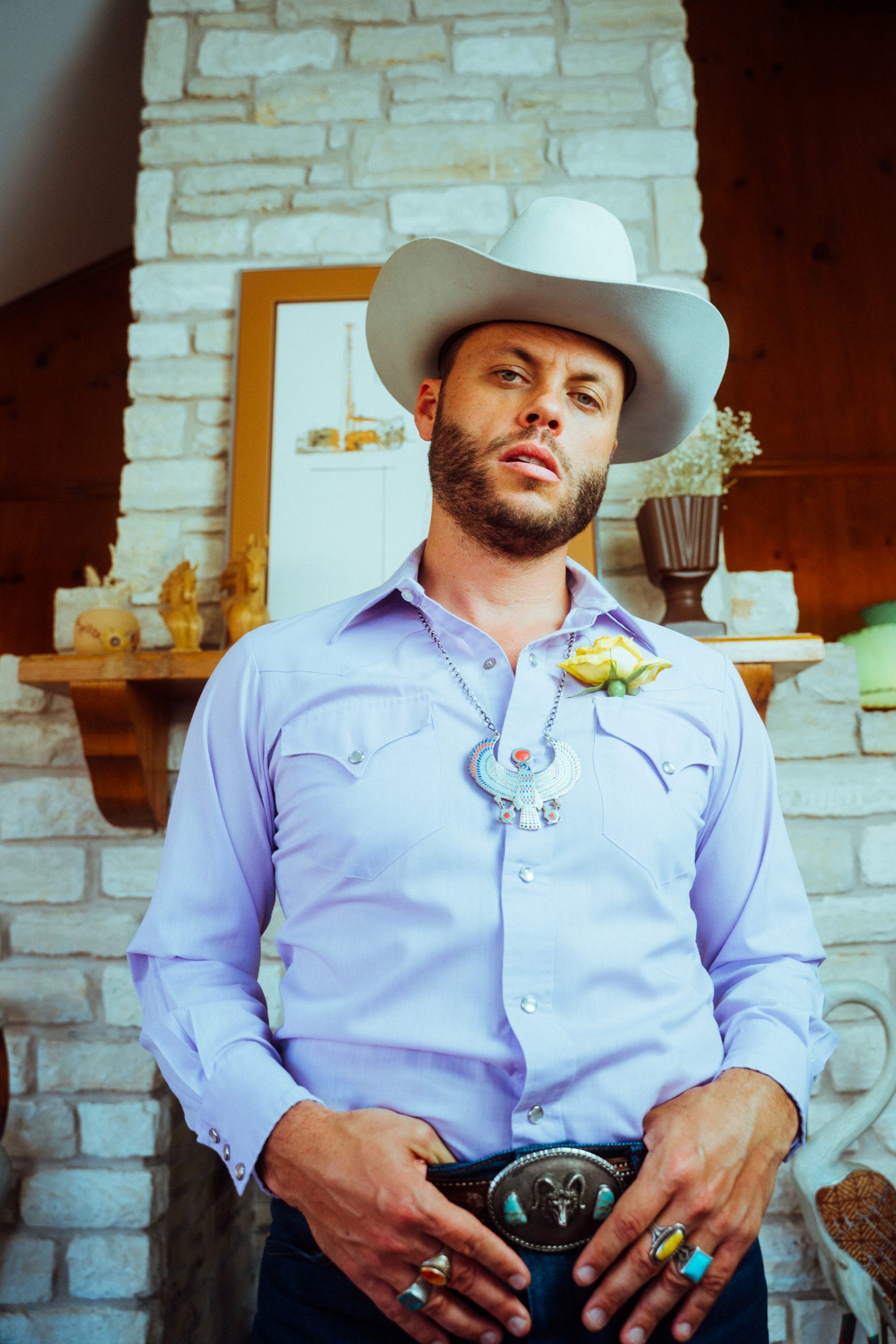
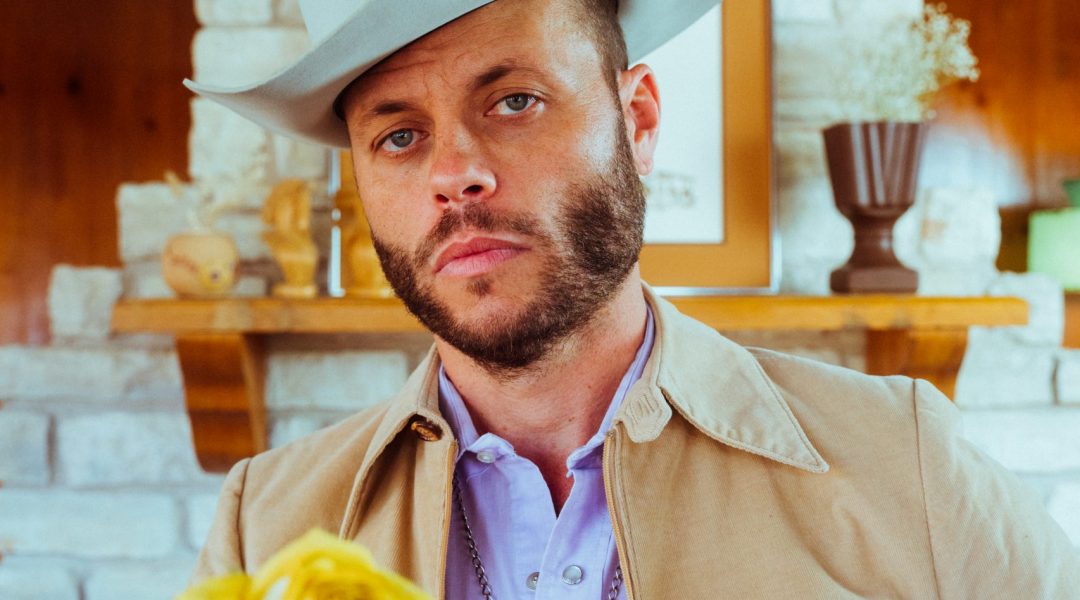
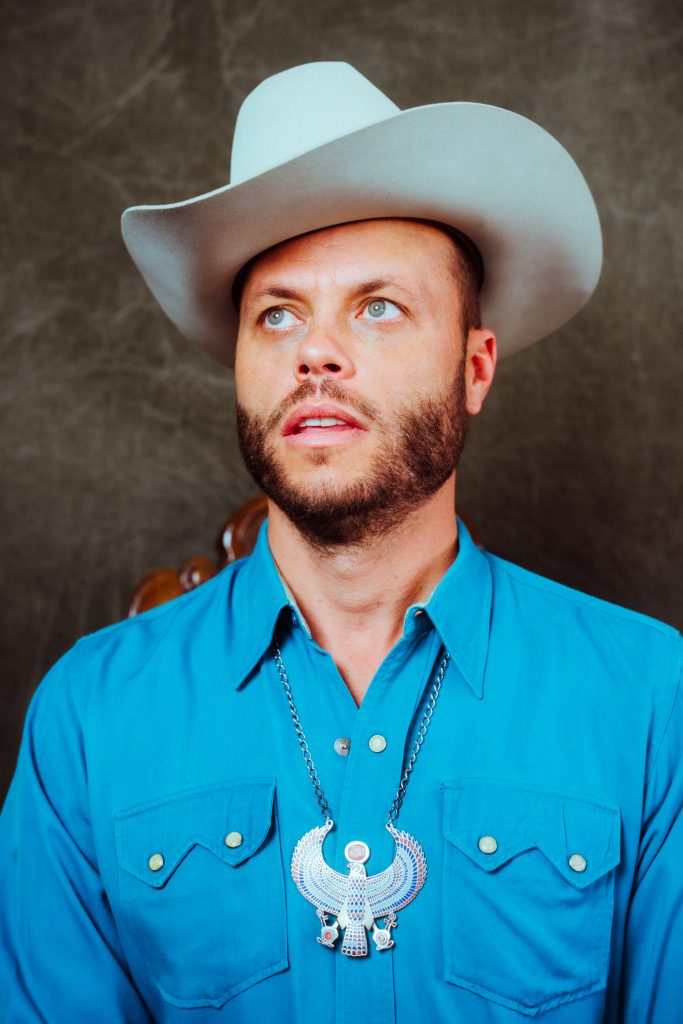
The Ballad of Charley Crockett – my story in Cowboys & Indians

https://www.cowboysindians.com/2024/03/the-ballad-of-charley-crockett/

BY Joe Nick Patoski

With vocal prowess and unparalleled vintage cowboy style, up-and-coming Texas crooner Charley Crockett is laying down the tracks of a lasting musical legacy.

In previous conversations, Charley talked my ear off, always sounding like a man on a mission trying to jam a whole lot into just a little bit. But here in a spacious, air-conditioned backstage area with all the creature comforts within reach — “Topo? Ranch water?” — and a luxurious touring bus parked outside (“I got it from Florida Coaches with Willie’s recommendation”), he was more relaxed, measured.

Years of playing on the street, years of playing with bands, appeared to be paying off.

“I just got lucky from where I was stepping off of the street and learning how to front bands and play clubs, mostly through informal blues jams around Dallas, Fort Worth, New Orleans, and in Austin,” Crockett said.

“I remember, s–t, walking into Sam’s Town Point [in Austin] for Breck English’s blues jam. I was afraid to get on that damn stage because I was such an itinerant.”

He said he’d been nervous when he first started playing big stages, but wasn’t anymore.

Bobby Cochran met Charley at an events center in Ukiah, California, near the marijuana fields of Mendocino County, back in 2012. “He came up with a buddy of his and asked if he could play during our band’s set break,” Cochran recalled. “A few months later, he came into this coffeehouse I managed and asked if he could play in the corner. A week later he came in and played for the afternoon. Mostly it was us, the employees, and him back in the corner. It wasn’t long after that he was collaborating with Kyle Madrigal, a guy I played with in a band. He recorded his first album at Kyle’s house.”

Madrigal recorded Charley singing and playing guitar, then added his own bass and Cochran’s drums. That was the foundation of A Stolen Jewel, Charley Crockett’s first album.

“I got a good vibe from him,” Cochran said. “He seemed like a solid dude, warm, friendly.

“That was the deal: He’d disappear back to Texas, come back to town, play a handful of gigs, hang out, then disappear again. Then he found his band in Dallas.”

The singer had met guitarist Alexis Sanchez at a Dallas blues jam. Even though Sanchez fronted his own band, Charley talked him into joining forces. Sanchez admired his new collaborator’s hustle, which included leaving giveaway copies of his record in the restrooms of clubs where he was playing. He played fair.

Sanchez: “Whatever he’d make from tips or selling CDs, he’d split it with the band.”

“Those guys would be with him whenever he’d come back to Mendo after that,” said Bobby Cochran. “That was the end of my playing in his band. Once he found what he wanted, he was locked into it.”

Charley dodged jail time again, this time for his involvement in marijuana production. He got a $10,000 fine when he showed the judge the record he had just made. He wasn’t an outlaw. He was legit.

The artist first caught my ears and eyes with the video of his original version of “Trinity River,” where he sports a fedora and wingtips, all vintaged-out like a sideman for the Squirrel Nut Zippers, while playing on a Deep Ellum street corner and inside the studio of KNON, Dallas’ cool community radio station. No one ever sung about the Trinity River. The only song I knew was by Oak Cliff ’s T-Bone Walker whose very first record featured “Trinity River Blues,” and released in 1929, years before Walker became the king of electric blues guitar. T-Bone Walker sang, “That dirty, dirty river sure has done me wrong.” Charley Crockett sang his Trinity was the “dirty little river gonna get me clean.”

Crockett said he was in New York City crashing in a Brooklyn indie band’s rehearsal space when T-Bone Walker made him realize the best, easiest way to explain himself.

“I was flipping through an old blues reel book, seeing all these blues names,” he said. “I remember stopping on T-Bone Walker and looking at him, looking at the song, the little chord chart that was denoting the unique style of kind of jazzy blues chord, the shapes he was holding. It was surprising because I’d been holding chords that way since I was a kid. I just never knew what they were called.

“That was the day I no longer was running away from

Texas. I turned around and realized that it was just who I

was.” He affirmed his Texan-ness in a Q&A for Texas Highways magazine: “I got all these managers calling me saying, ‘Look,

Charley, you know the world is bigger than Texas.’ I know this sounds brash, but this is the policy that I have adopted going forward: The world is not bigger than Texas. There is only Texas, and we take Texas to the world. That’s what I have to do. That’s how Stevie Ray Vaughan did it, that’s how ZZ Top did it, that’s how Willie done it, that’s how Selena did it, that’s how Freddy Fender did it.”

Sharing big stages with two of those role models — Willie Nelson and Billy Gibbons of ZZ Top — on the 2022 Outlaw Music Festival tour provided more serious schooling.

That was the day I no longer was running away from Texas. I turned around and realized that it was just who I was.

“When I was out with Willie on the Outlaw Tour, one of the coolest things about it, every time I was near Willie it felt like a cultural event,” he said. “His 90th birthday was absolutely a singular cultural event.” Billy Gibbons — whose band ZZ Top blazed their way into rock arenas wearing cowboy hats, sparkly Nudie suits, and boots, selling an idea of Texas — offered direct advice. “We were talking after one of the shows,” Charley said. Gibbons told him, “Man, that minor [chord] s–t you’re doing with your guitar … don’t let anybody talk you out of that. Keep doing all that minor s–t.” Charley beamed.

“I end up eating off the plate of a simple thing like that for the rest of my life,” he said, reaching deep back to when his legend began. “There was a woman on the street in New Orleans when I was much younger. They called her Angel. She said, ‘Baby, you got a beautiful voice, but you need to learn this one thing. You got to start low if you want to get high.’ She was telling me that I needed to develop and use the power of the lower part of my voice for my diaphragm.” His band, the Blue Drifters, became fully formed in 2017 with the addition of Kullen Fox, a multi-instrumentalist who plays trumpet and accordion as well as keyboards. He’s from Austin, where Charley had relocated.

Crockett’s version of “Jamestown Ferry,” an early ’70s country hit for 13-year-old Tanya Tucker, got traction on social media when the track was released on Lil’G.L.’s Honky Tonk Jubilee, an album of old country covers, released in 2017. More country classics — George Jones’ “The Race Is On,” Ernest Tubb’s “Saturday Satan, Sunday Saint,” Tom T. Hall’s “That’s How I Got to Memphis,” and Danny O’Keefe’s “Good Time Charlie’s Got the Blues” — appeared on 2018’s Lil G.L.’s Blues Bonanza album of covers, along with Crockett blues favorites “T-Bone Shuffle” and “Travelin’ Blues” by T-Bone Walker, and Jimmy Reed’s “Bright Lights, Big City.”

An extended tour that year, opening for the Turnpike Troubadours, the hugely popular Red Dirt indie country band from Oklahoma, tapped into what would become his core audience.

Mark Neill, who had co-produced The Black Keys’ retro rock, reached out to Crockett after hearing some tapes, luring him to his Georgia studio with the promise of making “a real country record.” Two breakthrough albums came out of the collaboration, Welcome to Hard Times and Music City USA, Charley’s country-est records yet. Just as significantly, Neill stressed to Crockett, it’s important to think of songs cinematically.
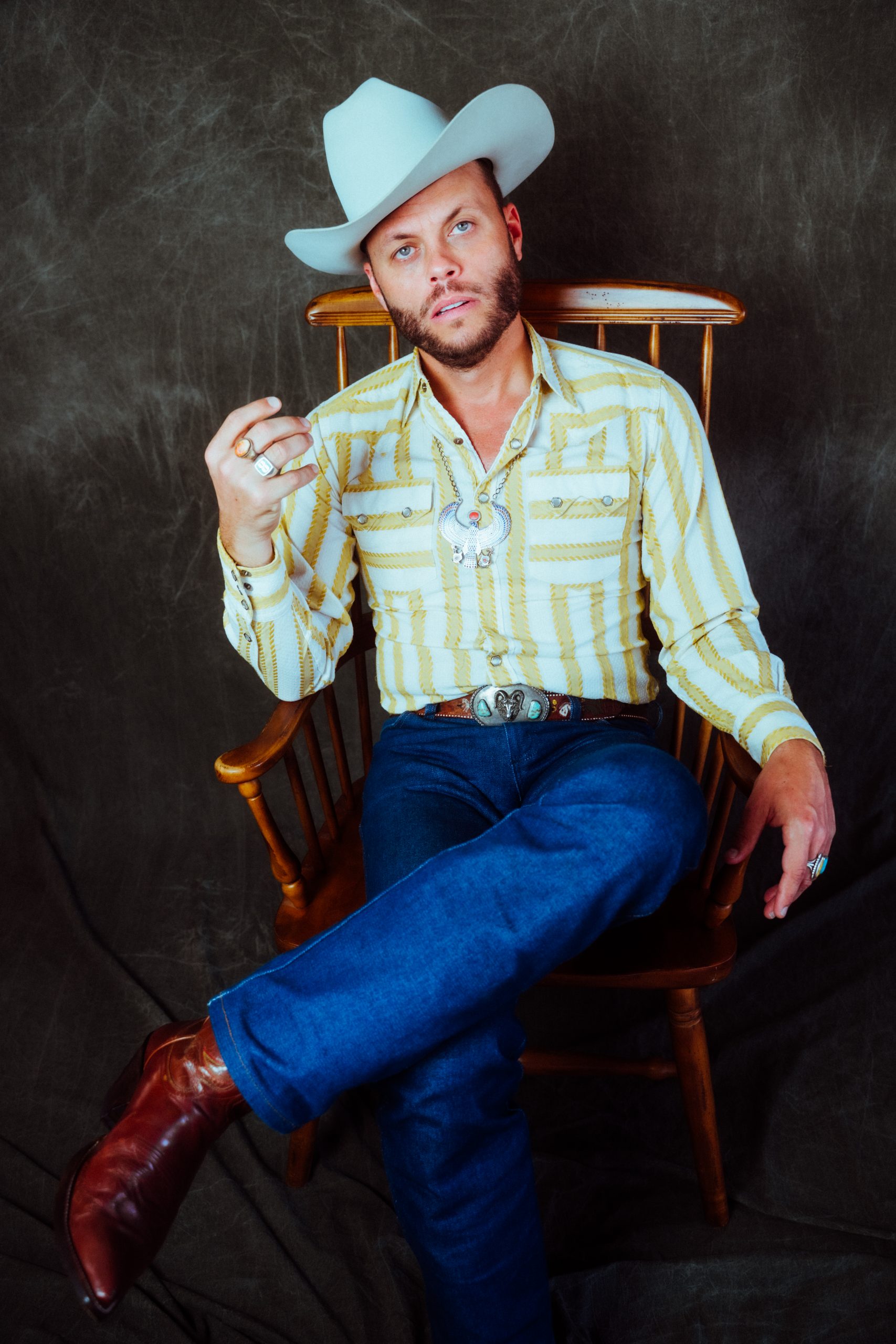
Lil G.L. Presents Ten For Slim: Charley Crockett Sings James Hand took the hard country affinity to the extreme, paying tribute to the late James “Slim” Hand, an older Texas honky-tonker who became Charley’s mentor and muse for a spell. Hand became such a presence, he played the lead character in the video for “That’s How I Got To Memphis.” The band took to calling him “the man from Waco,” the inspiration for the title of Crockett’s next album, released in 2022.

The Man From Waco, recorded with the Blue Drifters, was supposed to be a demo produced by Bruce Robison at his studio in Lockhart outside of Austin. The tracks would get the full studio treatment later, most likely with mega-producer Rick Rubin at his Shangri-La Studios. Crockett had signed a publishing deal with Rubin, but Rubin as producer would have to wait. The demo was so good, it had to be an album.

The Man From Waco is a western saga, from the first twangs introducing the title track to the lonely Marty Robbins’ trumpet lines. Places that don’t get mythologized much like Waco and Odessa are enshrined. There is a sweet murder ballad, “July Jackson,” a new version of “Trinity River” that passes for swinging jazz, and a nod to his personal marketing strategy, “Name On A Billboard.”

In September 2023, Live from the Ryman, documenting his first performance at the Mother Church of Country Music in Nashville, was released as an album and video, capturing Crockett’s smoldering, restrained appeal. If bending the knees was good enough for Hank Williams and swiveling the hips defined Elvis, those stage moves were good enough for him.

That same month, he released a track “Killers of The Flower Moon,” produced by T-Bone Burnett, based on his reading of the book about the murders of Osage people in Oklahoma for oil, the basis for director Martin Scorsese’s movie. The single coincided with the film’s release. That was followed a couple of weeks later by the exclusive Amazon release of Crockett’s renderings of Link Wray’s “Fire & Brimstone” and “Jukebox Mama” from an obscure album, timed with the Rock & Roll Hall of Fame’s induction of Wray, the distinctive “Rumble” guitar instrumentalist and the first Native American honored by the institution.

The latest album, $10 Cowboy, was recorded at Arlyn Studios in Austin with the Blue Drifters and several outside players, with longtime collaborator Billy Horton assisting on production. It’s a cohesive collection of songs with a big sound — voice out front, steel guitar floating around ethereally in the background, horns providing a punchy response to vocal calls. Darkness lurks beneath the surface, pushed by Sanchez’s spaghetti western guitar and Fox’s soul organ fills: undelivered promises in “America,” the post-classic decadent imagery of “Crystal Chandeliers,” jackals roaming the valley in “Solitary Road,” the refrain of “Tired Again” … The street took all my money. The street took all my money. The street took All. My. Money!

A $10 cowboy singer, it turns out, is a lot like a $10 cowboy, according to the last lines of the album’s title track: When I was out there on those street corners, standing behind this guitar, ten dollars was a whole lot of money. Cowboys, cowboy singers are both highly hazardous occupations. Look out!
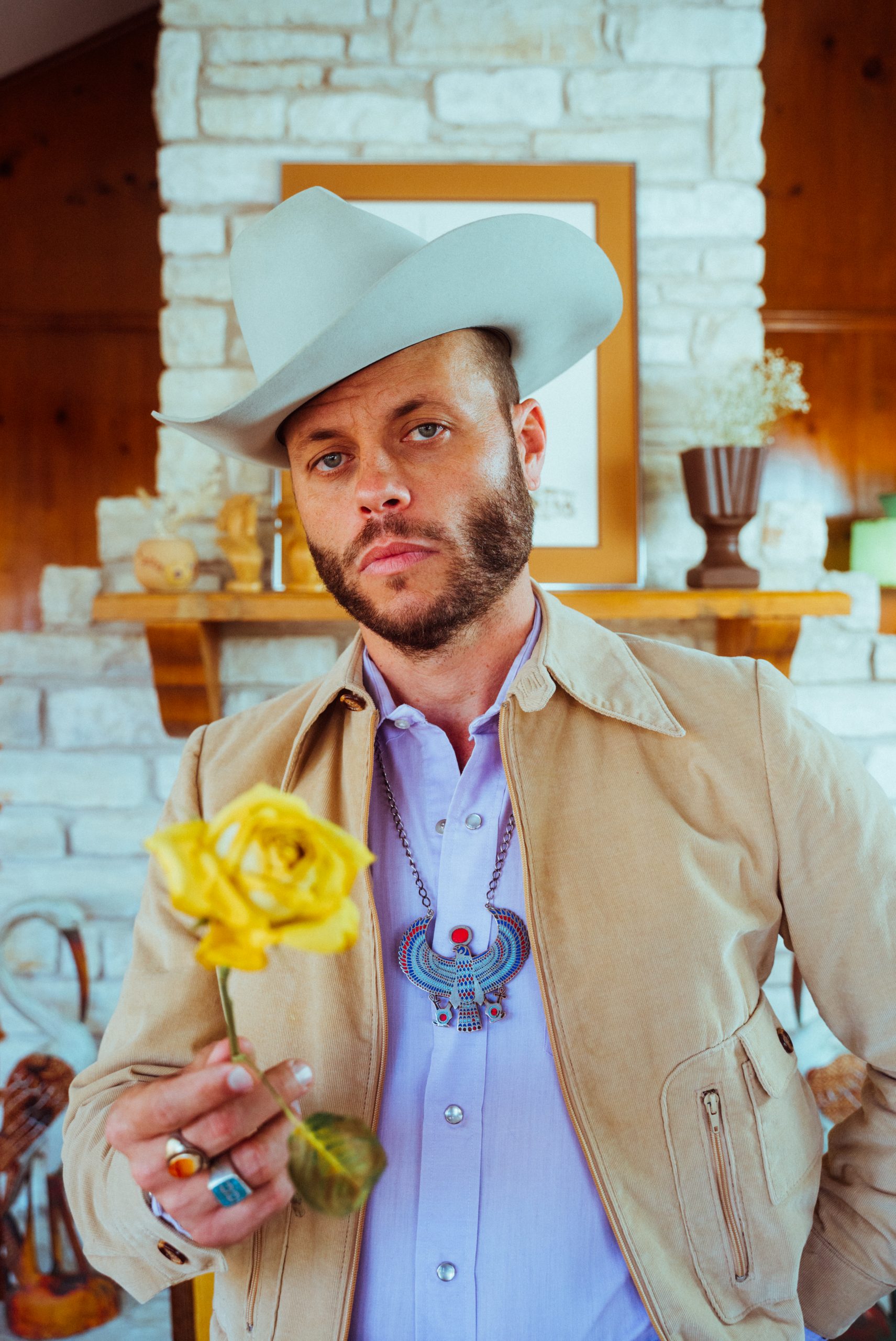
The notion of “Charley Crockett, Cowboy Singer” came into focus in 2019, right after the crooner almost died.

“I had an ablation and then open-heart surgery [to repair fused aortic valves] a week apart,” he said matter-of-factly, acknowledging a congenital condition. After recovering, he returned to Mendo where Bobby Cochran shot a simple video of Charley riding a bicycle around rural Mendocino Country, wearing a cowboy hat, lip-synching to the catchy, accordion-driven tune “River of Sorrow” from the album The Valley.

In early 2020, COVID hit, shows were canceled, and Crockett’s career went on hold. With the album Welcome to Hard Times scheduled for July release, Crockett asked Cochran to drive around the Southwest and make some videos.

Charley, his fiancée, and Cochran hit the road. “The best thing we could do was be out in the middle of nowhere sleeping in the truck, pitching a tent, because it’s the damn pandemic,” Charley said. “You couldn’t stay in a hotel if you tried. We were just camping out and hitting those national parks and all those really beautiful places I’d seen over the years.”

“It was insane,” recalled Cochran. “We started in Bishop [California], went to Death Valley, Zion, the north rim of the Grand Canyon, New Mexico. We filmed ‘Fool Somebody Else’ at the Opera House of Amargosa Hotel near Death Valley, It was closed because of COVID so we decided to film outside until this young guy, who turned out to be the caretaker at the hotel, walked over and asked, ‘What are y’all doing?’ We kind of explained and he went, ‘Oh, you’re Charley Crockett! I saw you in Indiana a year ago. Sure, you guys can go in and film. Right on.’ ”

The footage shot by Bobby Cochran completed Crockett’s transformation to Cowboy Singer. The sprawling landscapes fit his songs to a T. Each video is introduced by the shot of a rotary telephone or pay phone out in the middle of nowhere, ringing.

What does the phone imagery mean?

“Okay, I’m going to tell you the truth,” Charley said, drawing closer, speaking conspiratorially. “All right. You see how that cord’s hanging out of the back of that phone unplugged? That’s so all my real friends can get through. It rings all the time.”

He grinned. I would just have to abide by the mystery. His imagery set to music was catching on. The Lone Star Film Festival in Fort Worth recognized him for his western-themed videos. December and January were spent along the 411 mile route between Austin and the High Plains town of Littlefield, Texas, home of Waylon Jennings and home of Waymore’s Drive-Thru Liquor Store and Museum, run by James Jennings, Waylon’s brother. Charley Crockett was filming his first full-length movie.

When I was playing on the street in New Orleans, the best gig that I could imagine myself getting was the 4 p.m. gig at the Apple Barrel.

The day before our visit, Charley had been in New Orleans at Esplanade Studios recording those Link Wray tracks that turned into his first Amazon exclusive (all rights reverted back to him at the first of the year, he pointed out proudly. )

While in the Big Easy, Charley also dropped by the Apple Barrel on Frenchmen Street. “When I was playing on the street in New Orleans, the best gig that I could imagine myself getting was the 4 p.m. gig at the Apple Barrel,” he said. “I thought that that was the cream of the crop. [New Orleans hoodoo blues guitarist] Coco Robicheaux, he died in that bar.

“He died sitting in the bar stool right about where I was sitting when the bartender was telling me, ‘The last thing [Coco] said was the next round’s on me.’ That bartender made a funny joke.

“He said, ‘That’s the first round that was ever on him.’ ”

Charley was recognized at the Apple Barrel and recognized on the streets of New Orleans, where he’s known as a blues singer. He’s still a NOLA local, just like he’s a Dallas local and an Austin local. But on a global scale, he’s a Cowboy Singer now.

Was he getting recognized a lot?

“Everywhere,” he said flatly.

Is it a hassle?

“It can be,” he admitted in a plaintive voice before catching himself and straightening up. “Hey man, we signed up for this.”

Yep, the Cowboy Singer sure did.
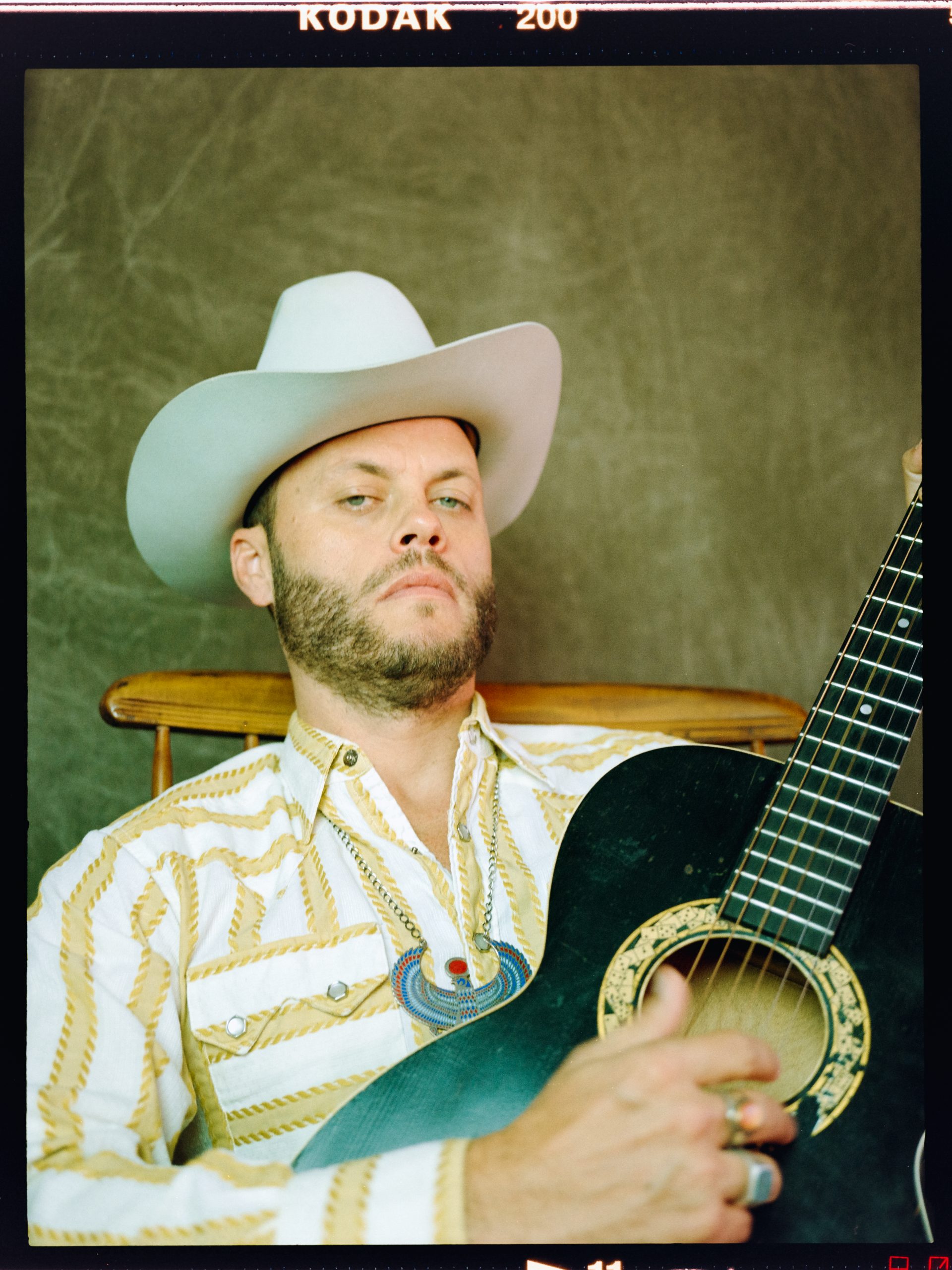

Charley Crockett’s album $10 Cowboy comes out in April. Find out more at charleycrockett.com.
From our April 2024 issue.
PHOTOGRAPHY: Courtesy Jackie Lee Young

Continue Reading

John Lomax 3 and the Family Tradition

https://texashighways.com/travel-news/with-new-performances-john-lomax-iii-fuels-the-lomax-family-legacy-of-preserving-american-folk-songs/

John Lomax III photo by Amanda Lomax.

John Lomax III has been part of my music life for half a century. We were both budding music journalists for Country Music magazine back in the 1970s, and he’s one of those displaced Texans I’d see whenever I visited Nashville over the decades. Every time, it seemed, he was into something new and cool: seguing from writing to managing artists like Townes Van Zandt, Steve Earle, David Olney, The Cactus Brothers, Kasey Chambers, and dulcimer player David Schnaufer (“He reinvented the instrument much as Earl Scruggs did for banjo,” John III says); hanging out with terrific Texas singer-songwriters like Guy Clark and Nanci Griffith; doing licensing deals; overseeing reissues; running an export record enterprise; teaching at Middle Tennessee State University.

Over all that time, I’ve never asked much about his family legacy, thinking John would probably be tired of the subject, since he was the grandson, son, nephew, and father in the first family of American music folklore. It was a surprise, then, to hear John Lomax III tell me in his thick, distinctive drawl that he made his debut performing in front of a live audience at the age of 77, singing songs and telling stories about the Lomaxes at a house concert near Nashville last month.

“Can’t sing for beans, but it’s not about the singer,” he admits from the start. “It’s about the songs and the heritage of our shared culture.” That translated into 19 songs and numerous stories over 85 minutes, performed in front of 20 people. “Seventeen of them strangers,” Lomax points out.

Now, with an Aug. 18 booking at Crystal Bridges Museum in Bentonville, Arkansas, as opening act for Michael Martin Murphey, and two October dates confirmed for Houston, the “Lomax On Lomax Show” appears to have legs. John III is learning more songs that were documented by elder Lomaxes and polishing stories about his family, who emigrated to Texas from Mississippi by covered wagon in 1869 and settled on a small farm in the Bosque River valley near Meridian that backed up to the Chisholm Trail during the era of cattle drives. Proximity to cowboys and a good ear were all the first John Lomax needed.

“Grandfather would hear the cowboys singing at night to keep the cattle calm,” John III recounts. “He started sliding out of the house to hear the songs better, somehow worked out a way to remember the melodies without musical training or books, and wrote down the words.” Putting to paper what he heard was the birth of the academic disciplines of ethnomusicology and folklore.

“My grandfather chased cowboy songs, riding on horseback with a tape machine tied to the front and back,” John III says. “He collected a lot along the Brazos. Grandfather’s father was a tanner. He described them as ’the upper crust of poor white trash’ in Adventures of a Ballad Hunter, John Avery’s 1947 autobiography, reissued in 2017 by University of Texas Press. A Black farmhand taught John Avery a whole lot about Black music.

“From there, the story goes to Alan, Bess, my dad, my brother, Joe (who published For the Sake of the Song: The Townes Van Zandt Song book), and me; and now a fourth-generation Lomax, John Nova, with his work at the Houston Press, Texas Monthly, and Texas Highways, where he is a writer-at-large.”

The 17,000-plus field recordings John III’s grandfather and his uncle Alan made for the Library of Congress are the gold standards of American music, capturing the diversity of songs and music makers across the United States before recording became commonplace. John Sr. discovered the musician Huddie Ledbetter, known as Leadbelly, and helped secure his release from Angola prison in Louisiana to launch his performing career, becoming one of the first artist managers some 90 years ago. Alan is credited with championing blues artists Robert Johnson and Mississippi Fred McDowell among others and was the first to record Muddy Waters. He befriended folk singers Woody Guthrie, Bob Dylan, and Burl Ives as well.

John III’s father, John A. Lomax Jr., sang folk songs, co-founded the Houston Folklore & Music Society, and managed blues giant Lightnin’ Hopkins, among other achievements. John III left Houston in 1973 for Nashville and a gig as publicist for storied producer and wildman Jack “Cowboy” Clement. Forty-nine years later, he has returned to Houston for an extended stay.

Coinciding with his performing dates at Rice University on Oct. 6, and for the Houston Folklore & Music Society on Oct. 8, John III is aiming to release a second, limited-edition vinyl-only album. The album will feature recordings his father made from recently discovered Peter Gardner tape reels of Houston Folklore programs and other events from the mid-’60s.

“Peter would have people come over to his house and sit around and sing, and it would go out over the air on the radio,” John III says. “It’s impressive how many people got their start at Houston Folklore: Guy Clark, Nanci, and Townes, Lucinda [Williams], Steve Earle, Richard Dobson, and KT Oslin. Lightnin’ Hopkins and Mance Lipscomb were regular Folklore Society performers.”

While John III’s father and late brother Joe were both recognized folk singers, John III comes late to the game—but he’s fully aware of his role. After his export record enterprise “got eaten by streaming,” he started looking for something else to do. “I’m the last male left from that generation to get out there and do this—keep the songs alive, keep the legend alive, embellish the brand,” he says. “I got to trying to sing, putting on headphones, listening to my dad, singing along with him to get the timing.”

Like his father and grandfather, he sings a cappella. He first performed publicly five years ago when he put out FOLK, an album of 16 of his dad’s home recordings. “I did a few things to flog it and got on Michael Johnathon’s WoodSongs Old Time Radio Hour on their anniversary show—me and Roger McGuinn,” he says. “I knew one song, ‘Buffalo Skinners.’”

His song list has grown considerably. “It’s come really easy,” he says. “I’ve heard these songs all my life. It’s all about the song. It’s about the stories of this one family, how we started, how we’re still at it 100 and some odd years later.”

For the format of the “Lomax on Lomax Show,” John III keeps it simple, starting off with cowboy songs. “‘Home on the Range’ was first published in a book by my grandfather in 1910,” he says. “I sing that but skip the verse everyone knows and do two or three verses that are rarely heard. They’re just as nice and pretty as the standard old ‘deer and the antelope play.’”

He then segues into Leadbelly, which leads to his uncle Alan. “[He] was the first to record ‘Sloop John B’ in 1935 in Nassau [Bahamas],” John III says about the song that became best known for the Beach Boys version. “Then I sing some songs my dad used to sing, then a Townes song, ‘Two Girls,’ because there’s a funny Doug Sahm story to it, and ‘My Old Friend The Blues,’ one of Steve Earle’s underappreciated gems. I close with this incredible song Ed McCurdy wrote in 1950 that’s on the second album of my dad’s recordings from 1965, ‘Last Night I Had the Strangest Dream.’”

In between he summons up obscurities such as “The Frozen Logger,” which was recorded by Johnny Cash and Elvis Presley, and Leadbelly’s “Roosters Crows at Midnight.” He’s also working out “Chisholm Trail.” “It’s not very obscure, but, really, the whole thing is obscure to the general public,” he says. “People in the business know some of these songs. The ‘Ballad of the Boll Weevil’ and ‘Sloop John B’ are the only two songs I do that were big hits, but that was nearly 60 years ago. … I want to keep these songs alive, because they’re so cool. This is America. Come on, let’s keep this thing going, folks.”

Songs uncovered by the Lomaxes continue to resonate in modern music, often through sampling. For instance, “Rosie,” which Alan Lomax recorded at the Mississippi State Penitentiary (also known as Parchman Farm prison) in 1947 and released on the album Prison Songs: Historical Recordings from Parchman Farm 1947-48 Vol. 1: Murderous Home, was sampled on the 2015 song “Hey Mama,” a massive hit by David Guetta that featured Nicki Minaj, Bebe Rexha, and Afrojack.

“That has actually generated more income than any song in the whole Lomax canon, more than Leadbelly’s ‘Midnight Special’ or ‘Goodnight Irene,’” John III says. “It was a hit in 18 countries.”

And on her 2016 song “Freedom,” with Kendrick Lamar, Beyonce sampled “Stewball,” sung by Prisoner 22 and recorded by Alan Lomax and his father at Parchman Farm in 1947. The phrase the song draws its title from can be found in “Collection Speech/Unidentified Lining Hymn,” performed by Reverend R.C. Crenshaw and recorded by Alan Lomax in 1959.

The more John III talks about the family legacy, the more the pride comes through. “You’ve got this one family now in its fourth generation steadily helping to preserve, promote, publicize, and otherwise draw attention to these wonderful songs, the people who created them, the people who sang them,” he says. “It’s something no one is really doing.”

Continue Reading

The Wild and Urban Brazos River

 https://texashighways.com/things-to-do/on-the-water/the-wild-and-urban-brazos-is-a-river-full-of-contradictions


The Brazos

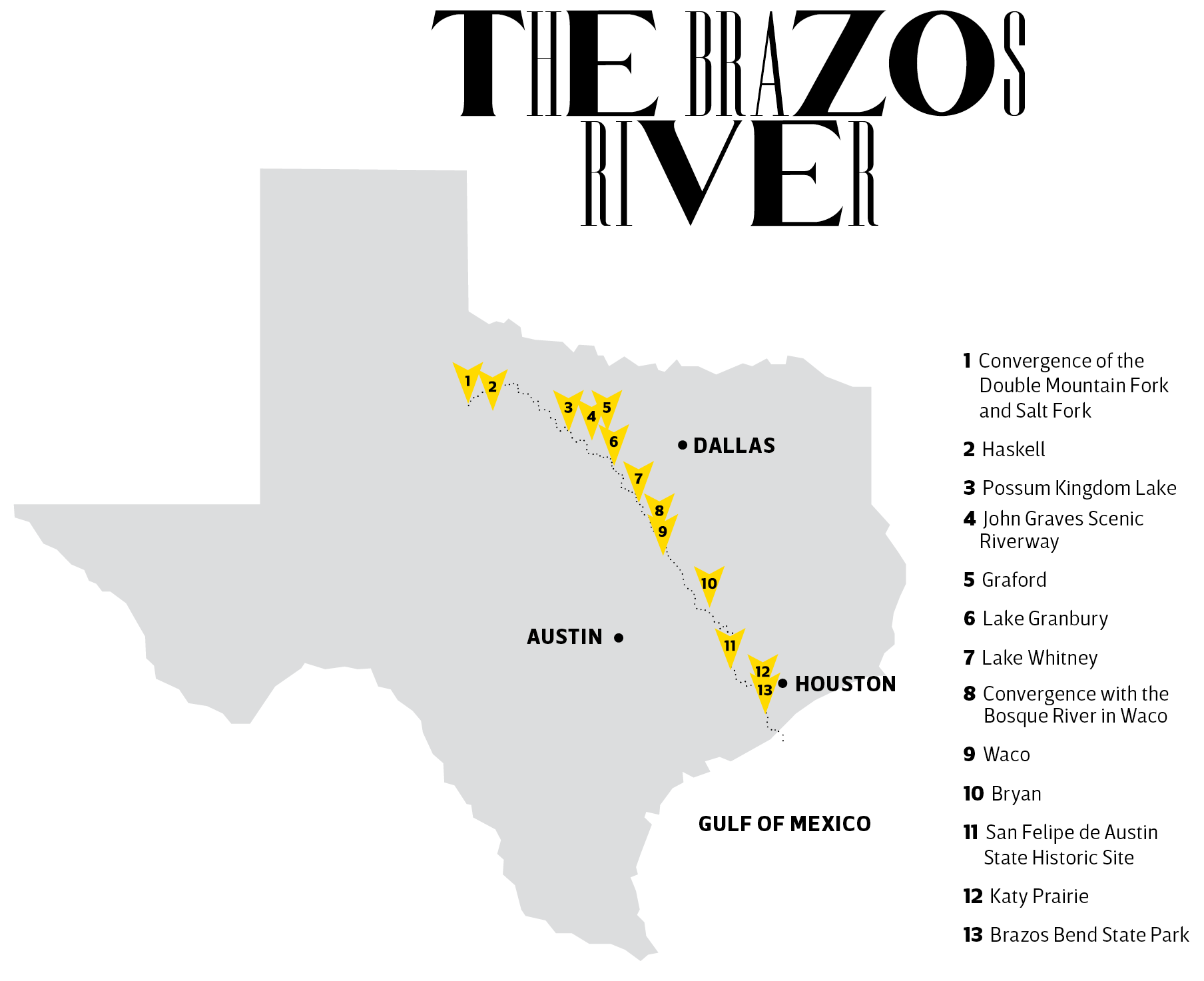
is a river of contradictions. Flowing more than 800 miles on a diagonal course across the breadth of Texas, the Brazos starts as a Western river coming off the High Plains and ends as a Southern river lazily looping its way to the Gulf of Mexico.

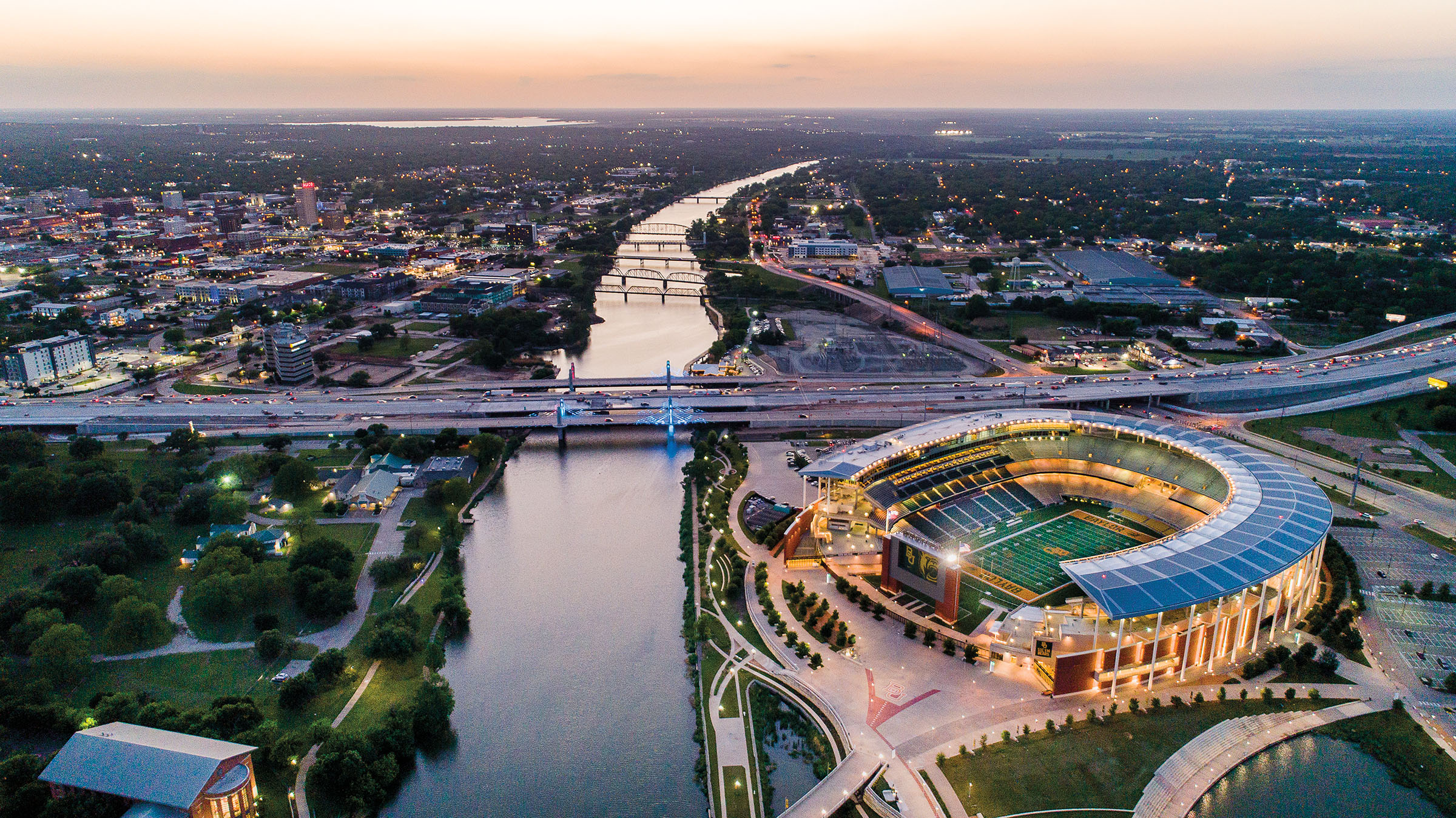
An overhead view of Waco, with Baylor stadium on the right and the Brazos river separating two sides of the city

A view of the Brazos running through Waco with Interstate 35 splitting the picture

Over the course of two centuries, engineers have dammed, channeled, diverted, and fragmented the Brazos, partly to control deadly floods. But while the river has been moderated, it has not been tamed. It still runs wild every now and then, thwarting even the mightiest barriers. As recently as 2016, Brazos River flooding damaged 1,400 homes and killed six people in southeast Texas.

Understanding the Brazos is no easy feat, no matter how many miles you’ve paddled, how many hours you’ve sat on its banks, or how many times you’ve jumped into it. In search of a new perspective, I asked my friend George Farris, owner of Above and Beyond Aviation in Austin, to fly me over the river. On a clear day last fall, Farris took me along as he piloted his Cessna 172 to Haskell, north of Abilene, where we began to trace the Brazos River down to the coast.

With its watershed extending into New Mexico, draws and drainages grow into forks until the Brazos finally becomes a river where the Double Mountain and Salt forks converge in northeast Stonewall County, about 18 miles northwest of Haskell. Here the river carves a ribbon through low, lightly vegetated canyons, its rusty color mirroring the iron oxide-rich red clay soil of the surrounding Rolling Plains.

Seventy air miles east of Haskell, near Graham, the Clear Fork joins the main stem, now a river of substance with distinct bands of dark green vegetation covering its banks and occasional bankside clearings identifying sand-mining operations and crop fields. To the east, wrinkles on the horizon signal the Palo Pinto Mountains and Possum Kingdom Lake, the first major impoundment on the Brazos, dammed in 1941. Covering 17,000 acres, the lake is home to a state park and draws boaters, anglers, skiers, and vacationers.

Below Morris Sheppard Dam, the Brazos courses through tall limestone bluffs and steep cedar-covered slopes. This was Comanche territory 150 years ago, later immortalized in author John Graves’ Goodbye to a River. The book details Graves’ canoe trip with his dog in November 1957, motivated by the coming Lake Granbury impoundment.

“Most autumns, the water is low from the long dry summer, and you have to get out from time to time and wade, leading or dragging your boat through trickling shallows from one pool to the long channel-twisted pool below, hanging up occasionally on shuddering bars of quicksand, making 6 or 8 miles in a day’s lazy work,” Graves wrote, “but if you go to the river at all, you tend not to mind. You are not in a hurry there; you learned long since not to be.”

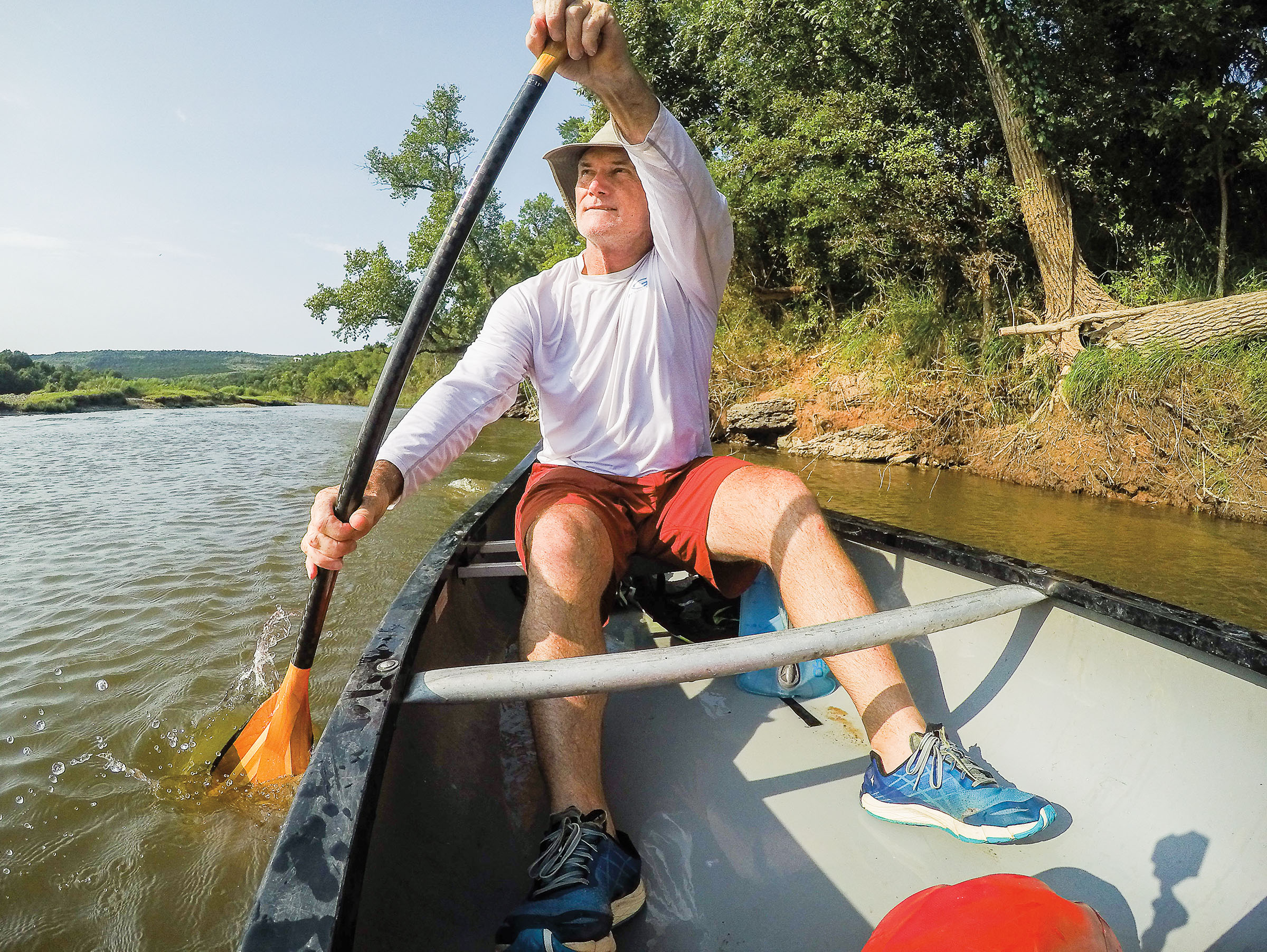
A man in a long-sleeve white shirt paddles a canoe

Canoeing the John Graves Scenic Riverway

After flying over the upper Brazos, I made plans to see it up-close with a return in late March to kayak a 19-mile section known as the John Graves Scenic Riverway. My paddling friend David Hollingsworth and I took a shuttle from Rochelle’s Canoe Rental in Graford to the put-in at the State Highway 16 bridge, where fishermen were also gearing up to hit the water, some by kayak and some in a shallow-drafting motorboat.

The land still wore its winter coat thanks to a late spring and extended drought. Amid the pools and riffles, I saw some huge carp and a teeny-tiny minnow. Perhaps it was one of two endangered shiner species that live in the Brazos—the sharpnose shiner and smalleye shiner.

A map showing major points on the Brazos river

.

Gene Wilde, a biologist who recently retired from Texas Tech University, compares the shiner’s reliance on free-flowing water to salmon of the Northwest. “They need 200 miles of free-flowing river to feed, grow, and spawn, completing their life cycle,” he said. “Dams on the Brazos prevent that.” The minnows were once so abundant that entrepreneurs seine-netted the river to scoop up schools of fish to sell for live bait. Now the little fish are hard to find.

Though the environment is changing, the scenery remains sublime. Long curving bends beneath cuesta slopes provide habitat for countless birds. I spotted over 100 great blue herons flapping their pterodactyl wings, white egrets and hawks by the dozens, and one juvenile golden eagle.

We camped on an island near Chick Bend, between SH 16 and Farm-to-Market Road 4. Hooting owls and howling coyotes serenaded us to sleep. At dawn, three Longhorn cattle awakened us as they lumbered across the island on their way to greener pastures.

Headwinds and low flow—water release from Sheppard Dam was a tepid 100 cubic feet per second—made it a difficult trip, one best saved for better conditions in the spring or fall. But the opportunity to see the same river embraced by Graves and Comanche chief Quanah Parker was worth the effort.

An overhead view of green fields and gravel roads

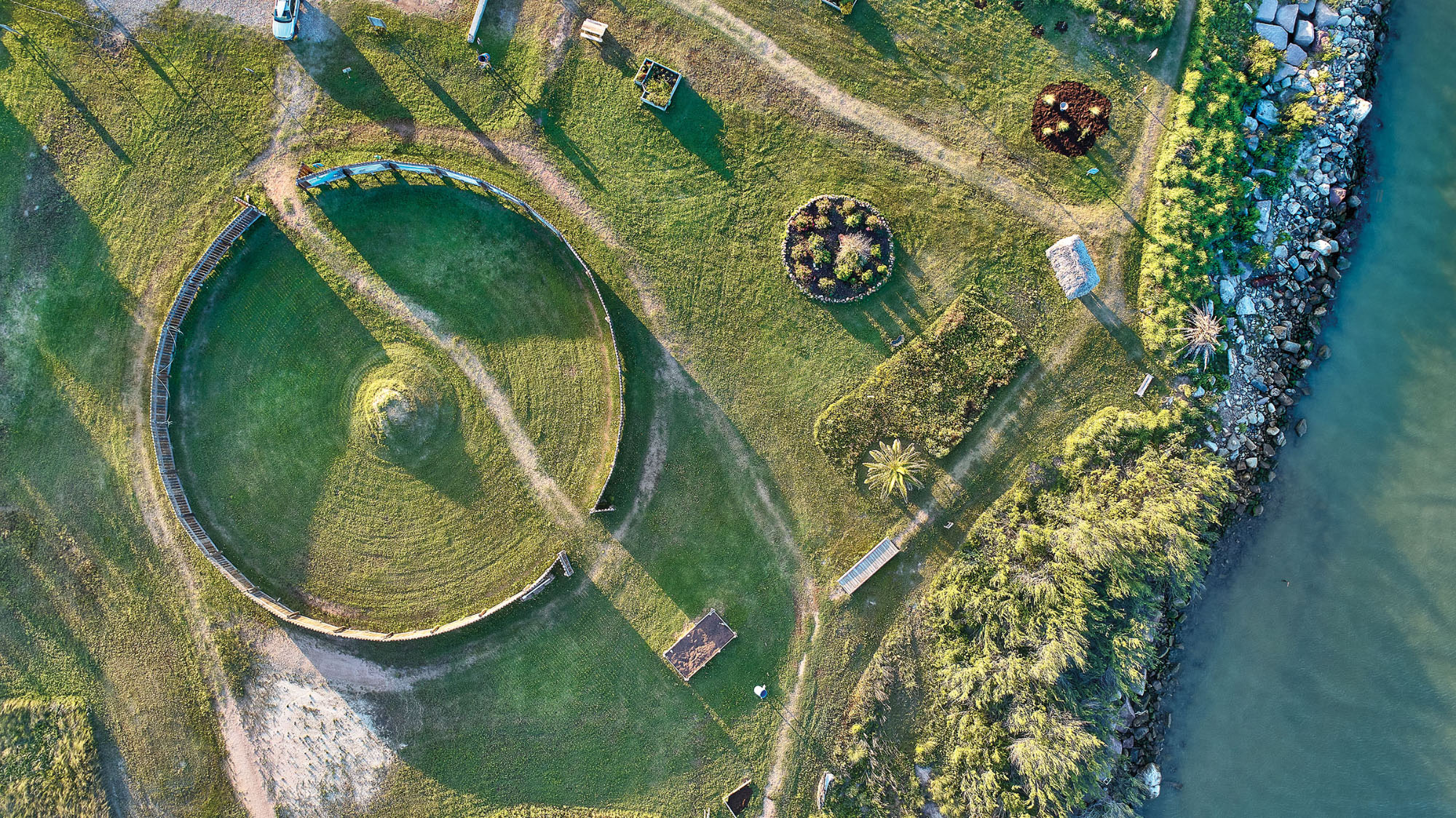
A reconstruction of Fort Velasco at the site where the Brazos met the coastline before the river was channelized

Back in Farris’ Cessna, we followed the Brazos as it wound through low hills before widening into its second major impoundment, Lake Granbury, and about 50 miles later, Lake Whitney. Below Whitney Dam, the Brazos takes on an orderly appearance with houses clustered close to its banks. On the outskirts of Waco, the Bosque River joins the Brazos at the top of the 416-acre Cameron Park, the crown jewel of Waco with its 100-foot limestone cliffs and outdoor recreational opportunities.

Waco is known for its bridges, most of all the Waco Suspension Bridge, the granddaddy of Texas bridges. Constructed with cables made by John Roebling Co., the same contractor who would later build the Brooklyn Bridge, it was the longest single-span bridge west of the Mississippi when it opened in 1870 as a toll bridge. In later decades, the cable system was replaced and the bridge reinforced with steel. The city closed the bridge to vehicles and converted it into a pedestrian bridge in 1971. The 1902 Washington Avenue Bridge, just upstream from the pedestrian bridge, connects downtown to Waco’s east side, a historically Black neighborhood.

Below Interstate 35, the Brazos serves as a scenic backdrop for Baylor University’s football stadium and baseball park, the Mayborn Museum Complex, and the boathouse for the school’s rowing team.

Waco built a new low-water dam in 2007 to mitigate flooding and stabilize Lake Brazos in the downtown area. Todd Nafe, outdoors writer for the Waco Tribune-Herald, said the river has since blossomed as a recreational destination. “The riverfront has become a significant economic resource, with restaurants, parks, food trucks, art festivals, triathlons, fishing tournaments, and fundraising events bringing folks back to the banks,” he said.

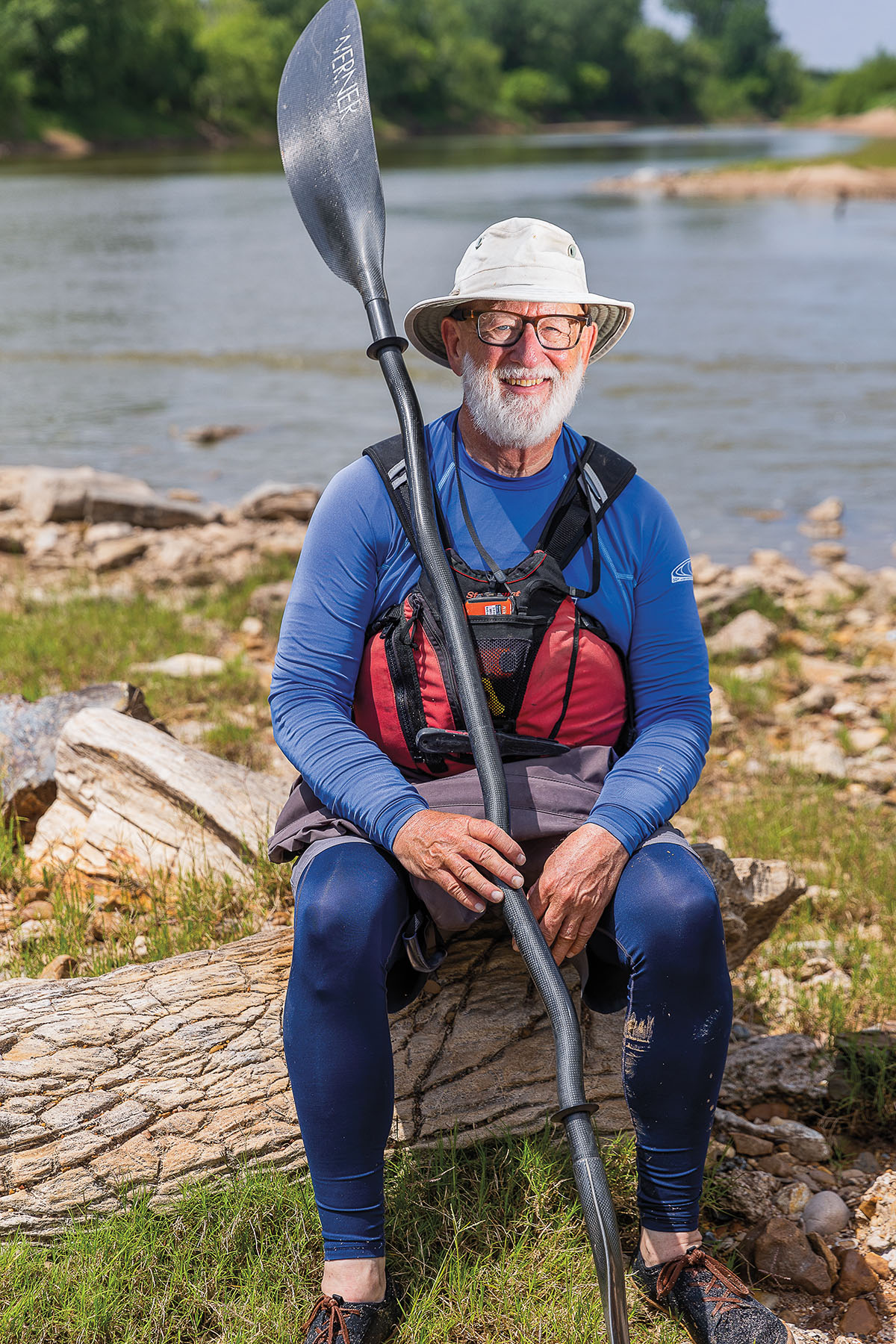
A man in a white hat and wearing a PFD holds a large paddle on the banks of the Brazos

Bruce Bodson, executive director of Lower Brazos Riverwatch

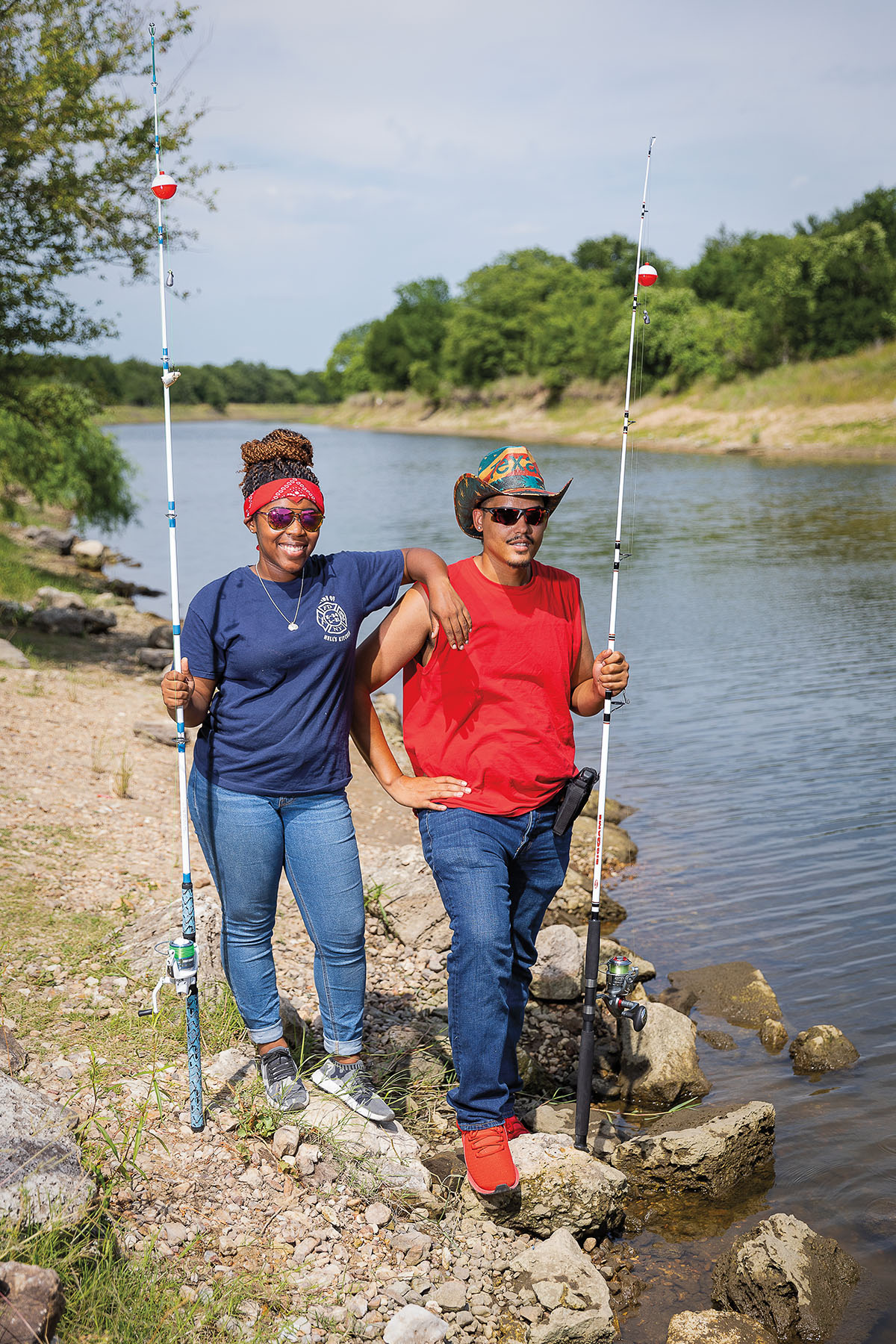
Two people stand holding fishing rods on the rocky banks of the Brazos river

Nicole Nation and John Valyan, of Bryan, fish the lower Brazos near Somerville.

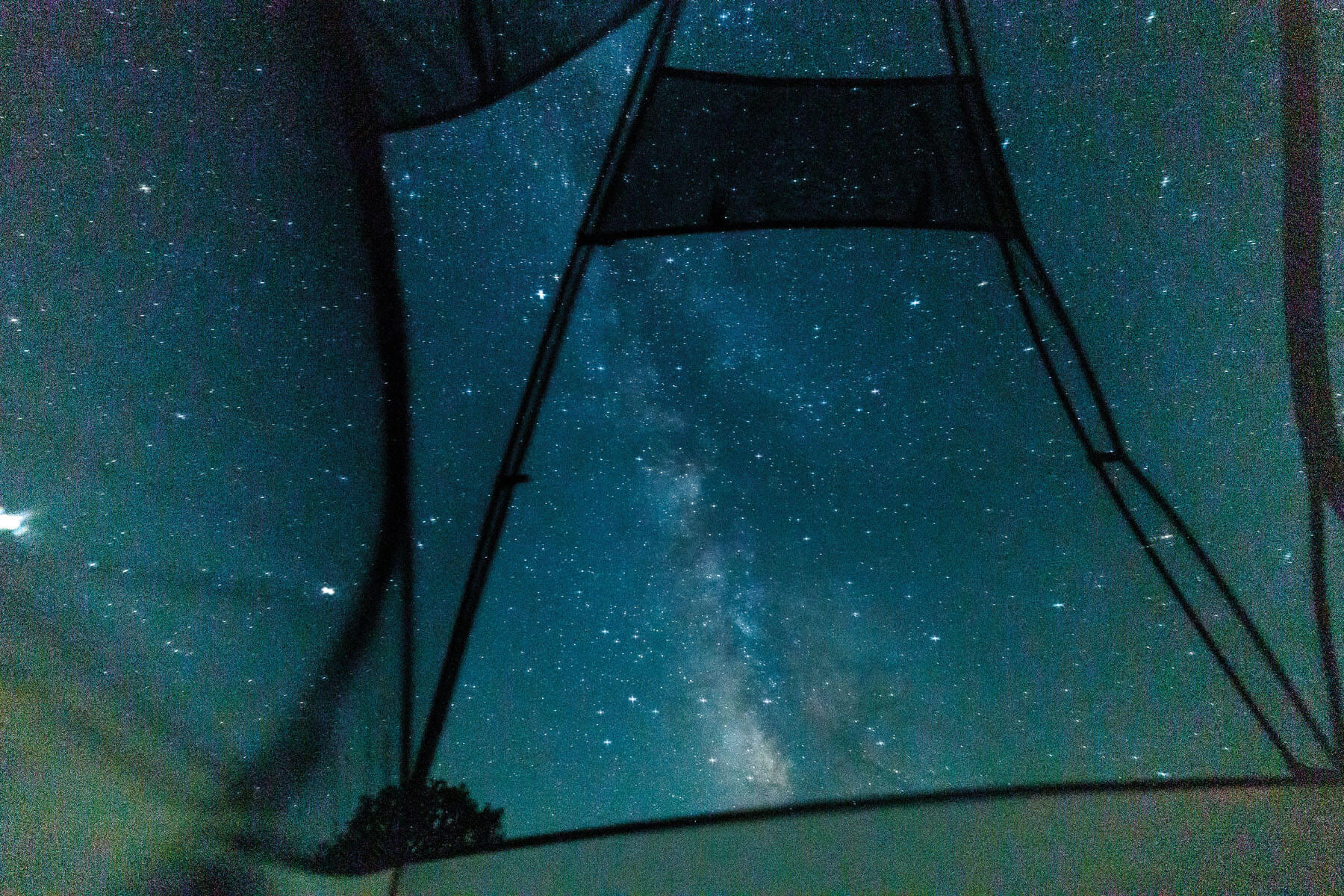
A dark bluish black sky with bright stars peeks through vents in the roof of a tent

A starry night as seen from a sandbank campsite on the upper Brazos River

Below Waco, the Brazos River runs through the cotton plantation country that seeded the Republic of Texas in the 1800s. As we flew south to refuel in College Station, we watched the Brazos cut through lush woodlands and wide-open prairies. Settlers who were part of Stephen F. Austin’s Old Three Hundred—the first colonists the empresario brought to Texas—developed farms in the Brazos bottomlands, some of them reliant on slave labor before the Civil War.

Robertson County towns like Hearne and Calvert remain primarily African American. Calvert was the hometown of Hall of Fame baseball player Rube Foster, who helped found and operate the National Negro League until his death in 1930. Another notable Foster, singer-songwriter Ruthie Foster—no relation to Rube—grew up in nearby Gause.

“Me and my cousins loved walking or riding in my Papa’s truck down to the river bank all summer long, with our fishing gear in tow,” recalled Foster, who now lives in Austin. “We smaller cousins always made too much noise for the older cousins to catch anything, but it was fun to just hang out, run around with our shoes off, and practice our fishing pole casting.”

To get a closer look at this section of the Brazos, I met six paddlers including Bruce Bodson, executive director of Lower Brazos Riverwatch, on a September morning for a 16-mile kayak trip starting at the SH 21 bridge, southwest of Bryan.

“I call this the free Brazos,” said Bodson, who founded the nonprofit Riverwatch in 2018 to protect the environment of the river’s 425 miles from Waco to the Gulf of Mexico. This is the least appreciated and most industrialized section of the river. “No dams exist below Waco,” he continued. “It is very much a Southern river—slow moving, looping and bending, with a gradient of less than 1%. The water quality is good, just silt-laden. There’s more variability than people realize.”

The river ran wide and muddy along our route, its sandy banks rising 10 to 20 feet high. Black willow, cottonwoods, and sycamores grew along the shorelines, where kingfishers alighted and skimmed the water. We saw three wild hogs swim across the river and a cottonmouth snake futilely chase a large frog out of the water and onto a beach. Along the way, we stopped to examine petrified wood and look for fossilized shark’s teeth and mussel shells.

Lower Brazos Riverwatch reports exposed pipelines and abandoned wells to state authorities, and their stewardship is getting results. “We’ve got legislative committees and landowners paying attention to the river as a potential asset now,” Bodson said.

We finished at the SH 60 bridge, 3 miles southwest of College Station, surrounded by rows of white cotton in every direction. “It’s wilderness down there,” Bodson said. “You get on that river, and there is nobody down there. You are absolutely alone.”

History of the Brazos

By the time 18th-century Spanish explorers gave it the name Los Brazos de Dios (The Arms of God), the Brazos River had been home to creatures and humans for tens of thousands of years. Learn more about this natural and cultural history at museums along the river’s course.

Waco Mammoth National Monument, Waco: About 15,000 years ago, the Brazos was prime habitat for the extinct Columbian mammoth. At this archeological site near the confluence of the Bosque and Brazos rivers, see the fossils of a nursery herd of Ice Age Columbian mammoths, along with fossils of a camel and juvenile saber-toothed cat. nps.gov/waco

Brazos Valley Museum of Natural History, Bryan: This museum features exhibits covering the Brazos Valley’s history back to the Ice Age, including exhibits on Native American artifacts, great Brazos floods, and cotton farming. brazosvalleymuseum.org

San Felipe de Austin State Historic Site, San Felipe: Founded in 1824 on a Brazos River bluff, San Felipe served as Empresario Stephen F. Austin’s colonial capital until it was burned in 1836 during the Runaway Scrape. The historic site includes a museum and replicas of some of the town’s original buildings. thc.texas.gov/historic-sites/san-felipe-de-austin-state-historic-site

Washington-on-the-Brazos State Historic Site, Washington: Along with a living history farm and a museum covering the Texas Republic, this complex contains a replica of Independence Hall—where delegates signed the Texas Declaration of Independence—a riverside exhibit about the historic Robinson Ferry crossing, and exhibits mentioning various 19th-century efforts to navigate the Brazos in steamboats. thc.texas.gov/historic-sites/washington-brazos-state-historic-site

Brazos Bend State Park, Needville: Located 45 miles southwest of Houston, this park has 37 miles of trails to explore wetland lakes and sloughs in the Brazos River bottomlands. The park is known for its alligators and waterfowl. tpwd.texas.gov/state-parks/brazos-bend

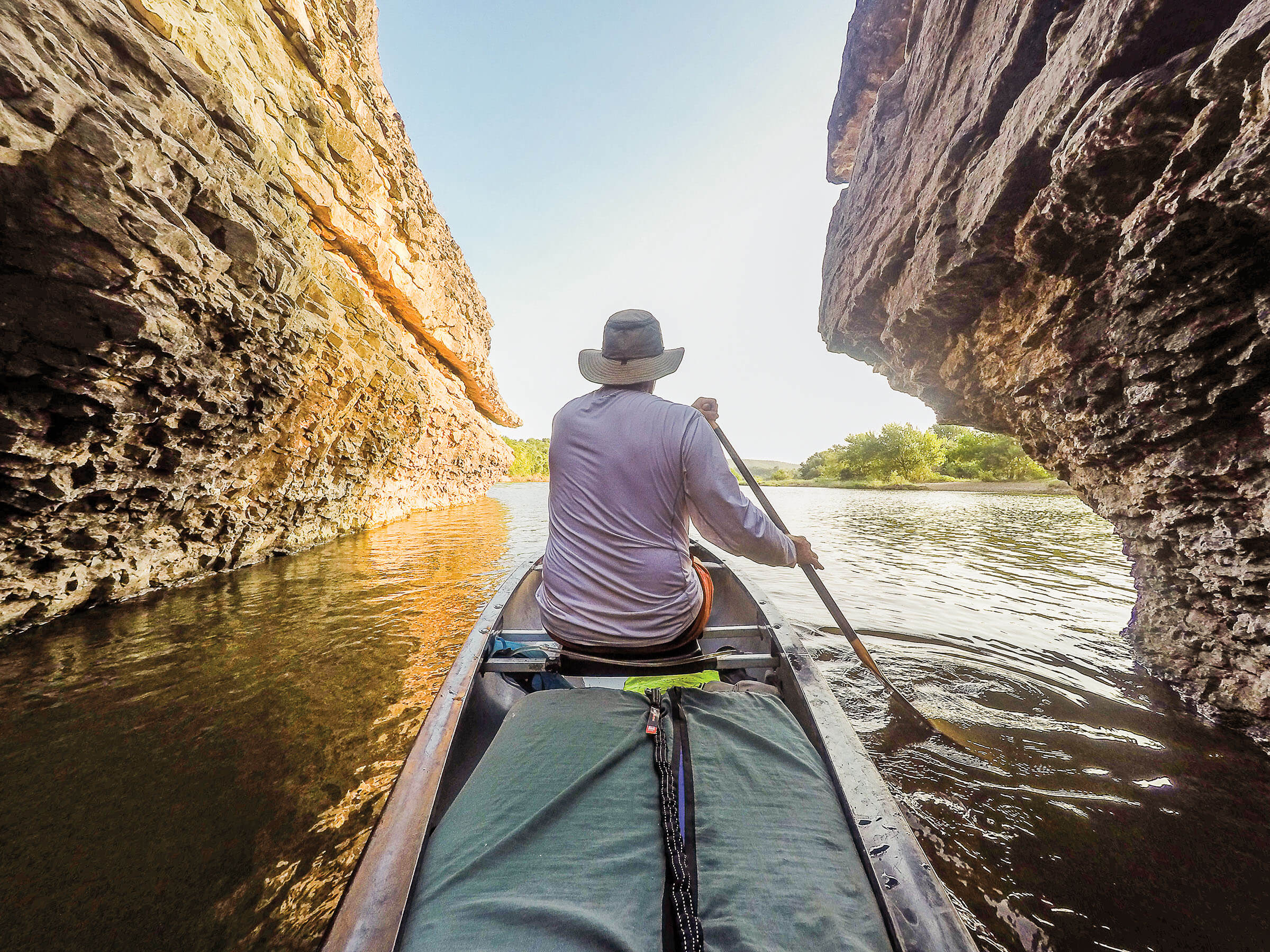
A man in a long-sleeved white shirt paddles between two rock outcroppings on a river

Canoeing through bluffs on a stretch of the upper Brazos known as the John Graves Scenic Riverway.

From my bird’s-eye view at 5,000 feet, I watched the landscape flatten as the Brazos cruised under US 290 and I-10 and through the Katy Prairie. This landscape looked similar to the Llano Estacado of the Panhandle, except everything was coated a verdant green. About 10 miles from the Gulf of Mexico, the Brazos’ graceful curves and loops straighten into a channel as the river enters Freeport, an industrial maze thick with refineries and tanker ships.

Unlike most Texas rivers, the Brazos empties directly into the Gulf, rather than filtering through bays or estuaries. But it doesn’t meet the ocean where it originally did at Surfside. In 1929, the Army Corps of Engineers diverted the Brazos just upstream by dredging a new channel that empties into the Gulf about 5 miles down the beach.

There, the Brazos ends undramatically. I later drove along the levee road that traces the channel for almost 4 miles, where locals fished for red drum, black drum, trout, and channel cat. After passing a cluster of storage tanks and buildings, I reached a gate with a “No Trespassing” sign. The waves of the Gulf were barely visible in the distance, but I couldn’t go any further.

A mile high up in the air offered a different perspective. Every man-made object I could see—from Possum Kingdom Lake to cotton fields, sand mines, historic bridges, the Houston skyline, and tankers in the Gulf—was tied to that green-brown ribbon I’d been following. As Farris banked his airplane west, I could see the mighty Brazos was really the most Texas river of them all.

Paddle the Brazos

There’s no better way to experience the natural qualities of the Brazos River than from the seat of a kayak or canoe. Outfitters operate at numerous locations on the Brazos, a river that offers a variety of paddling experiences throughout its course.

Rochelle’s Canoe Rental, Graford: provides rentals and shuttles for trips on the upper Brazos’ John Graves Scenic Riverway. rochellescanoeandkayakrental.com

Brazos Outdoor Center, Rainbow: the nearest wild river experience to DFW, includes campsites, equipment rentals, and shuttles. brazosoutdoorcenter.com

Dick’s Canoes, Aquilla: provides rentals and shuttles for trips on the Brazos below Whitney Dam. dickscanoe.com

Pura Vida Paddle, Waco: find kayak and stand-up paddleboard rentals, as well as classes, across the Brazos from Cameron Park and on Lake Waco. puravidapaddle.com

Waco Paddle Company, Waco: canoe, kayak, and stand-up paddleboard rentals in downtown Waco on the bank of the Brazos. wacopaddlecompany.com

Hidalgo Falls, Navasota: The closest whitewater to Houston, this private paddlers park is owned by the Texas Rivers Protection Association. txrivers.org/discover-texas-rivers/brazos-river

From the July 2022 issue
Continue Reading

The Westside Sound of San Antonio

from the December 2020 issue of Texas Highways magazine

Also known as Chicano soul, the Westside Sound blends rock ‘n’ roll with San Antonio roots

Albums by Mando and the Chili Peppers, Sonny Ace, Rudy and the Reno-Bops, and Doug Sahm exemplify the Westside Sound of San Antonio.

Fans of vinyl and the Westside Sound can get their fix at Janie’s Record Shop in San Antonio.


Texas music is known for its sense of place, whether it’s Western swing, guitar-powered electric blues, or Dirty South hip-hop. But at least one Texas city, and one specific part of that city, can claim a sound all its own: the Westside Sound of San Antonio.

The Westside Sound refers to a specific place and time, beginning in the 1950s, when Mexican American teenagers in San Antonio first heard rock ’n’ roll. Budding musicians from across the city formed bands playing music that incorporated rhythm and blues, often with a heavy horn section, and influences of swing, conjunto, and country. Sometimes referred to as “Chicano Soul,” the music drew on the early rock ’n’ rollers from New Orleans like Fats Domino and emphasized slow-dance standards known as “bellyrubbers.”

But unlike scenes in other places, the Westside Sound never completely went away. Its popularity persists thanks to veteran San Antonio musicians and fans championing their city’s native sound. You can hear the influence of the Westside Sound in songs like “Hey Baby Kep Pa So,” by enduring San Antonio keyboardist Augie Meyers, and in the music of younger musicians such as Los Texmaniacs, Garrett T. Capps, Mitch Webb and the Swindles, Adrian Quesada, and Jonny Benavidez.

One of the local fans keeping the Westside Sound alive is Chris Varelas, a retired firefighter who operates the NoHitNetwork.com website and KCJV 97.9—a low-power FM radio station based in Leon Valley in northwest San Antonio. Featuring non-charting regional releases from the 1950s through the ’70s—or “The Greatest Sounds You’ve Never Heard Of”—the station plays a whole lot of Westside Sound records.

“The Westside Sound is to San Antonio what Motown is to Detroit,” Varelas says. “The sound is unique and immediately identifiable. It’s really hard to convey the impact of a few local high school teenagers who decided to sing and dream.”

In the 1950s, San Antonio was far enough out of the mainstream, geographically and culturally, to foster a scene from local radio stations playing records by local bands. Only a few of those recordings—notably “Talk to Me” by Sunny and the Sunliners and “She’s About a Mover” by the Sir Douglas Quintet—made it onto the national charts. Still, radio airplay and jukebox spins made regional stars out of groups such as Rudy and the Reno Bops, the Royal Jesters, the Dell Kings, Sonny Ace y Los Twisters, the Dreamliners, the Commands, the Mar-Kays, and Charlie and the Jives.

Arturo “Sauce” Gonzalez was an early member of Sunny and the Sunliners in 1962. He later played Hammond B-3 organ with the late Doug Sahm, and today he leads Sauce Gonzalez and the Westside Sound.

“My band is called the Westside Sound and even I have a hard time explaining it,” he jokes. But, he says, a hallmark of the sound is simplicity.

“We used to play R&B tunes by Fats Domino, Little Richard, Smiley Lewis, B.B. King, Little Willie John, and lots of other Black artists,” he says. “We Chicanos from the Westside would rearrange the music for two tenor saxophones and piano. And it was very important to play the triplets. Playing them by ear rather than reading charts was the Westside Sound, too.”

The “Westside Sound” didn’t really exist as a moniker until 1983, long after the music’s heyday. That’s when Sahm,
a San Antonio-born musical prodigy who made his mark on the sound with the Sir Douglas Quintet, released an album with Meyers titled The ‘West Side’ Sound Rolls Again.

“That’s the first mention,” Jason Longoria says, pointing to the cover of the album in the music room of his San Antonio home. “No one knew what to call it until then.”

Longoria, 42, is another local keeping the Westside Sound alive through collecting records and sharing his research with the world. “The musicians came from all over San Antonio,” he adds. “But the Westside is the heart.”

A mural showing several famous Westside artists in San Antonio

The mural La Música de San Anto on West Commerce Street

San Antonio’s Westside, the oldest urban Mexican American neighborhood in Texas, is the historic hub of the city’s Hispanic culture. After World War II, two record labels, Rio Records and Corona Records, showcased the music of the working-class neighborhood.

Corona recorded traditional Spanish music ensembles. Rio Records issued records by young Mexican Americans playing all kinds of sounds. “Rio Records was to San Antonio what Sun Records was to Memphis,” Longoria says. “All these people had an opportunity to make a record. Rio Records owner Hymie Wolf would record anyone who came in, press up copies, and service jukebox distributors and radio stations with copies. He didn’t dictate what people should sing
or play.”

Longoria collects recordings and ephemera documenting the era. He has also sought out old performers and even gotten a few of them back on stage, including Rudy Tee Gonzalez, the lead singer from Rudy and the Reno-Bops; and Little Sammy Jay (Jaramillo), featured vocalist from the storied Tiffany Lounge club.

Longoria, who works at H-E-B’s corporate headquarters for his day job, developed his obsession through his parents’ love of the Texas Tornados, the 1990s Tex-Mex supergroup consisting of Sahm, Meyers, Freddy Fender, and Flaco Jiménez—all pioneers of the sound.

“When that first album came out, my parents would tell me about Doug Sahm and all the guys coming from around here,” Longoria says. “Doug Sahm stuck with me because he was local, very eclectic, and played a mixed bag of stuff that I related to.”

Longoria’s research traces the origins of the Westside Sound to the merging of two bands, Conjunto San Antonio Alegre and Conjunto Mexico, which joined forces as Mando and the Chili Peppers in 1955. As the players traded their bajo sextos and accordions for electric guitars, their music transitioned from polkas and rancheras to rock ’n’ roll and Louisiana blues. They were also hearing music from local Black blues musicians, a scene with 1940s roots in the Keyhole Club, which advertised itself as “the First Integrated Night Club in the South.”

Mando and the Chili Peppers toured around the country, playing cities like Las Vegas, Denver, New York, and Philadelphia, where they appeared on the popular American Bandstand TV show. Back in San Antonio, the band had its own television show on KCOR, first with Spanish-speaking emcees and then with Scratch Phillips, a Black disc jockey.

On the Road With Rock ’N Roll, the band’s 1957 debut album, improbably fused country, conjunto, R&B, and triplet-powered rock ’n’ roll. The playlist incorporated songs from Ernest Tubb’s “I’m Walkin’ the Floor Over You,” to the popular standard “South of the Border,” to “San Antonio Rose” by Bob Wills and His Texas Playboys.

“San Antonio has got its own version of pretty much all of American music,” Longoria says.

And, it’s got music that no other place can claim.

Finding the Westside Sound

On the radio, DJ Chris Varelas plays Westside Sound bands on his station 97.9 FM in San Antonio and online at nohitnetwork.com. Legendary San Antonio DJ Henry “Pepsi” Peña hosts the San Antonio Oldies show Sundays
6-9 p.m. on Radio Jalapeño, KEDA 1540 AM, 102.3 FM, and saoldies.com.

In the clubs, see live performances by Westside Sound bands including Sauce Gonzalez and the Westside Sound, the Westside Horns, Joe Jama, Frank Rodarte, Al Gomez, Little Henry, Chente Montes, Jack Barber, and Urban Urbano at venues including The Squeezebox, Sanchos, and The Lighthouse Lounge. facebook.com/thesqueezebox; sanchosmx.com; facebook.com/the-lighthouse-lounge-100242124663964

On TV, hear strains of the Westside Sound on Jimmy Kimmel Live! Cleto Escobedo III leads the house band, which includes his father, Cleto Escobedo Jr., a saxophonist and founding member of San Antonio’s Dell-Kings.

In the shops, find Westside Sound recordings at Janie’s Record Shop, 1012 Bandera Road, and Del Bravo Record Shop, 554 Enrique M. Barrera Parkway. facebook.com/janiesrecordshop4; delbravorecordshop.com

On display, in David Blanca’s mural, entitled La Música de la San Anto, 1303 W. Commerce St., and in exhibits at the South Texas Museum of Popular Culture. texpopsa.org

From the December 2020 issue
Continue Reading

The Ballad of Robert Ealey and His Five Careless Lovers: An Oral History


This is the story of the band who wised me up to what music is really all about – Robert Ealey and His Five Careless Lovers of Fort Worth, Texas.

This 50 page oral history began in January 2020 with a long conversation with Sumter Bruton III and continued with interviews with Mike Buck, Jackie Newhouse and Freddie Cisneros. Their origin stories together answered many questions I’ve had for almost a half century. That which wasn’t answered retreated behind the veil of mojo and mystery, as tends to happen when you’re dealing with honest blues.

Nancy McMillen Design made all the words look real nice.

The book retails for $20 exclusively at Record Town in Fort Worth and Antone’s Records in Austin.

You can also get a copy by sending a check for $25 (inculding postage) to 706 Deer Run, Wimberley, TX 78676

Contact  joenickp@gmail.com if you want to use a credit card.  And if you’d like the book inscribed, just say so.

Continue Reading

Accordion: Texas’ Main Squeeze

https://www.texascooppower.com/texas-stories/life-arts/texas-main-squeeze

My story about the accordion in Texas Coop Power

Texas’ Main Squeeze
The accordion has been a beloved musical instrument since it got here


  • Chris Rybak continues a tradition brought to Texas by European settlers in the 1800s.
    IMAGE: Courtesy Chris Rybak
  • Rybak as an 11-year-old.
    IMAGE: Courtesy Chris Rybak
  • Accordionist and bandleader Emil Schuhmann of Fayette County in the 1890s.
    IMAGE: Winedale Photograph Collection | The Dolph Briscoe Center for American History, The University of Texas at Austin

Of all the musical instruments brought to Texas by German, Czech, Polish and Moravian immigrants in the 19th and early 20th centuries, the accordion made the most unexpected inroads among Mexican, Cajun and Creole communities who embraced it as their instrument of choice. Generations later, squeezeboxes still move Texans.

Chris Rybak, known as the Accordion Cowboy, who hails from Hallettsville, explains that when he picked up the instrument 30 years ago, at age 11, accordion-playing bandleader Lawrence Welk was a big thing. “But that also made accordion not so cool,” he says, adding that now it’s heard in jazz, rock and a wide variety of other musical genres. “It doesn’t have to be just your grandpa’s oompah anymore.”

Packing the full-bodied sound of an entire band into one instrument, the accordion, invented in Europe in the 1820s, provided entertainment at dances of all kinds as Texas was settled. Without the need for electricity or amplification, its sound carried farther than stringed instruments.

The accordion was a key instrument for western swing bands in the 1930s and ’40s. It remains the most versatile musical instrument going in Texas, straddling regions and borders and injecting its sound into rock, country, blues, jazz and zydeco. It’s the defining instrument of conjunto, the folk music of South Texas, and the faster-paced norteño, a folk music of northern Mexico that is similar to conjunto.

Without the accordion, there would be no Mark Halata at Wurstfest, no Brave Combo playing WestFest, no Ennis Czech Boys working the National Polka Festival, no Fritz Hodde and the Fabulous Six performing at an SPJST hall.

The European-style accordion, the traditional large instrument with piano keys on the right-hand side that functions like a glorified organ, is favored by the Bohemians, Czechs, Poles and Germans of South and Central Texas; some Zydeco bands around Houston and southeast Texas; and Fort Worth’s Ginny Mac and Austin’s Debra Peters. It can weigh upward of 30 pounds.

Conjuntos and some zydeco bands favor the smaller, diatonic model of accordion with buttons on both sides that change notes as you push and pull and has considerably faster action. Texas Cajuns play an even smaller, simpler diatonic model with fewer buttons.

Rybak explains that Czech, German, German-Polish, Tejano and Cajun music each embody a distinct style. “On the other hand, when you go to a conjunto place,” he says, “the band will throw in a few Czech songs. And vice versa. The accordion is distinctive, and it can cross boundaries and cultures.”

The universality of the accordion is celebrated at the Accordion Kings and Queens at the Miller Outdoor Theatre in Houston on the first Saturday in June, a production of Texas Folklife. All the bands onstage feature accordions as the lead instrument, but the performers sing in English, Spanish, French, German, Polish and Czech, reflecting each group’s ethnic background. Despite those differences, everyone dances the same on the dance floor, moving in a counterclockwise direction.

These days, Rybak says he mostly uses a digital accordion, which has changed his instrument much the way a digital keyboard changed piano playing. He can create blaring trumpets to open the Johnny Cash standard Ring of Fire.

“I would say for most shows, I play 70 or 80% with a digital accordion,” he says. “And that’s what the new generation really loves, too. They can do anything on it.”

Although Joe Nick Patoski gave up piano accordion for violin at age 7, he owns a button accordion autographed by Flaco Jiménez.

Continue Reading
1 2 3 … 5